Published: 22nd of September2026.
This is not a sponsored post & I am not affiliated with any of the hotels, restaurants or organisations mentioned.

Ninh Binh is one of those destinations that looks deceptively simple to plan.
You see the photographs: towering limestone karsts, winding rivers, rice fields, ancient temples and tiny boats disappearing into caves. You decide you want to go. Easy, right?
Well… sort of.
The problem is that Ninh Binh isn’t one single attraction. There are several boat routes, viewpoints, temples and other sites spread across the region, so deciding where to go, how long to spend there and what to include can quickly become a little overwhelming.
I’ve put this guide together to make that process easier, covering the practical questions you’ll need to consider when planning your trip, from what to see and how many days you need, to when to go and how to get around.
If you’re still deciding whether Ninh Binh belongs on your Vietnam itinerary, have a look at my Ha Long Bay vs. Ninh Binh guide first. Once you’ve decided to go, this is where to start planning.
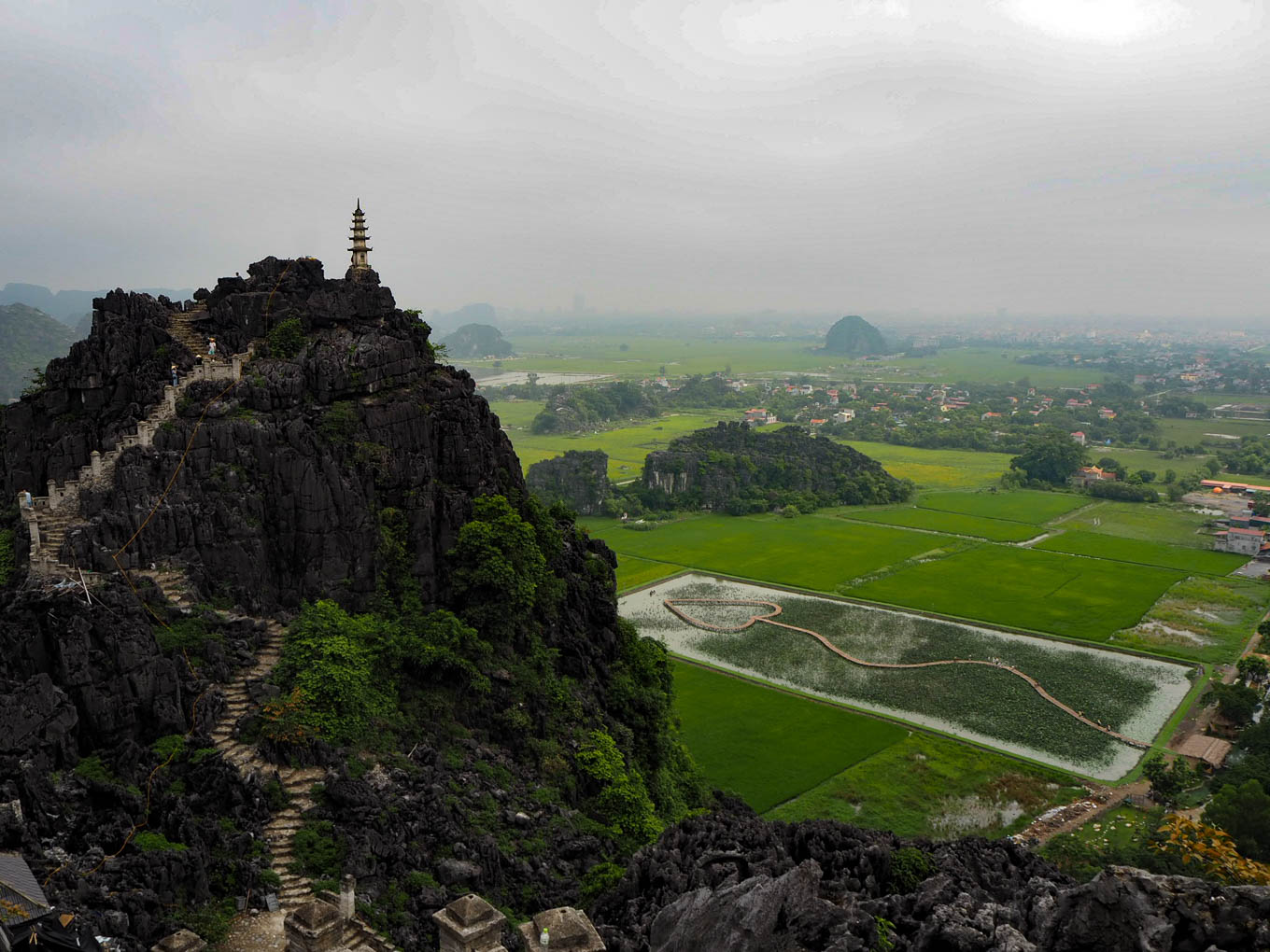 📍Hang Mua viewpoint, Ninh Binh
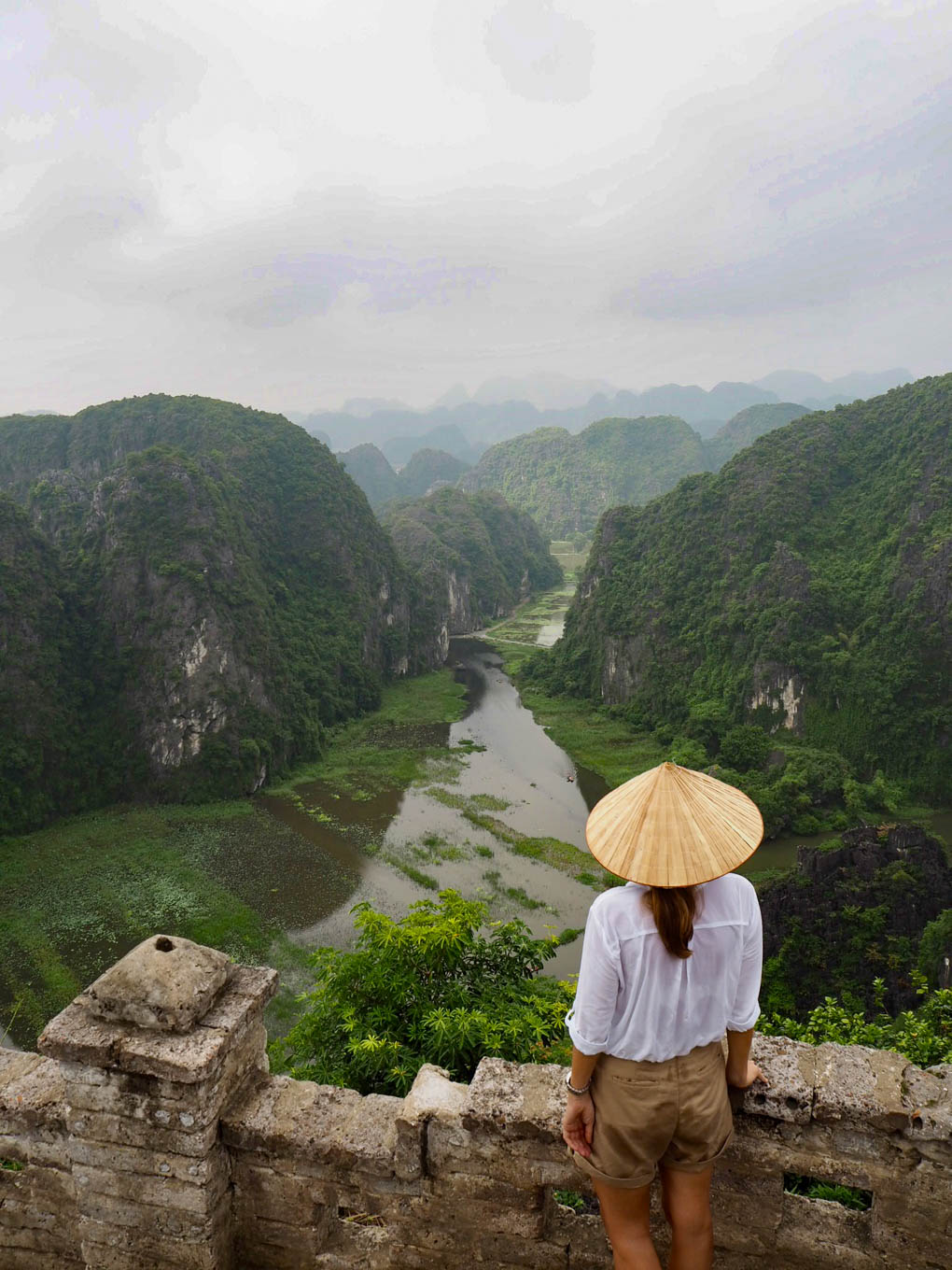 📍Hang Mua viewpoint, Ninh Binh
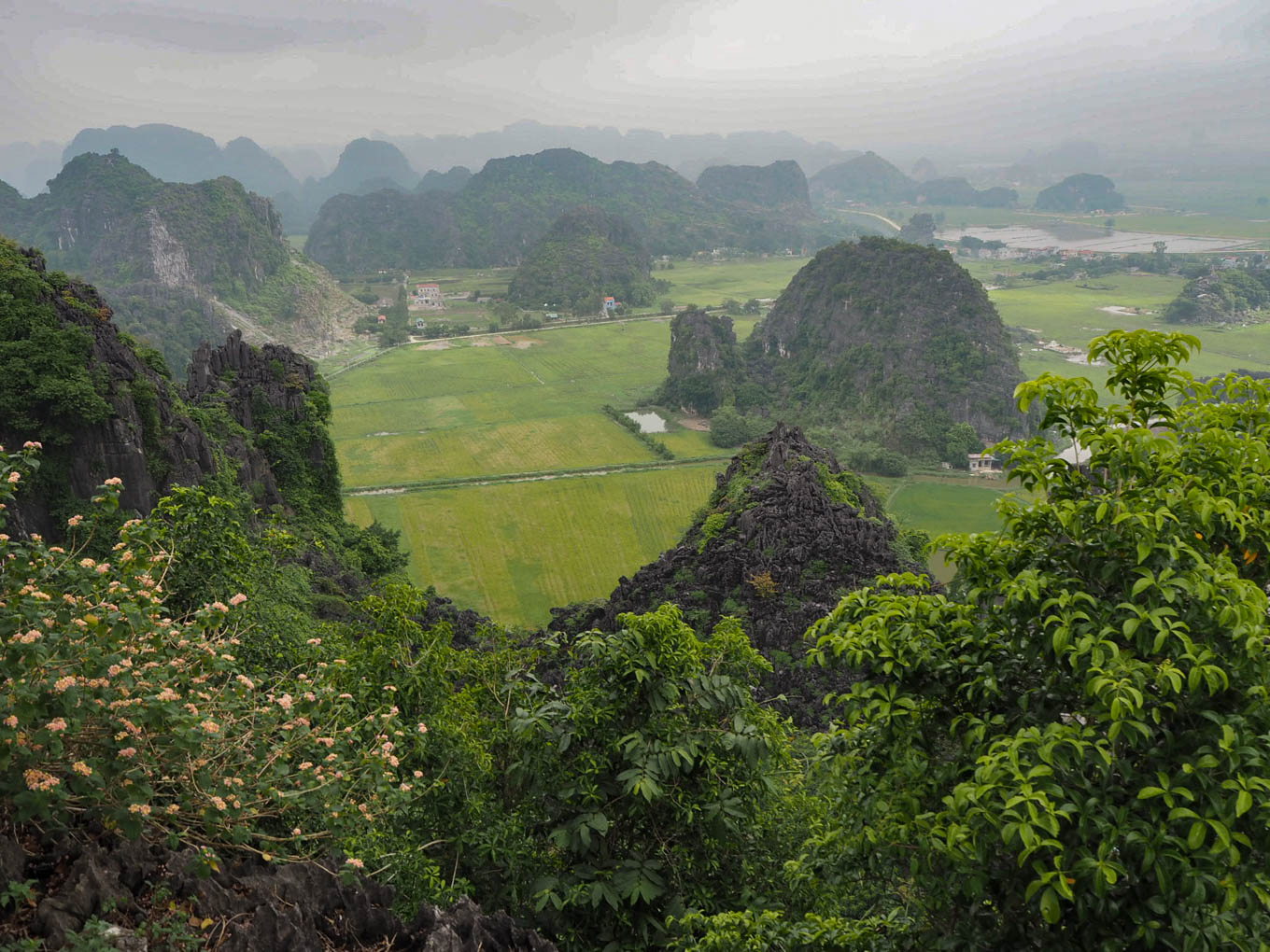 📍Hang Mua viewpoint, Ninh Binh
WHAT ARE THE MAIN SIGHTS IN NINH BINH?
Ninh Binh has a surprisingly long list of sights and experiences. Don’t panic! You absolutely don’t need to visit them all!
For a first visit, I’d divide the main attractions into three broad groups.
THE MUST-SEES OF NINH BINH
Trang An
The quintessential Ninh Binh experience: a small-boat journey through a spectacular landscape of limestone karsts, rivers, valleys and caves. There are several different routes, with temples and grottoes along the way.
Tam Coc
Another classic boat trip, this time following the Ngo Dong River through rice fields and three caves beneath the karst mountains. The surrounding countryside is also particularly good for cycling.
Hang Mua (Mua Cave)
One of Ninh Binh’s most famous viewpoints. After climbing roughly 500 steps, you are rewarded with a panoramic view over the Tam Coc valley and its surrounding limestone peaks.
WORTHWHILE ADDITIONS TO YOUR ITINERARY
Bich Dong Pagoda
A beautiful series of small pagodas built into the side of a limestone mountain. It is close to Tam Coc and can easily be combined with a cycling trip through the surrounding countryside.
Hoa Lu Ancient Capital
The former capital of Vietnam during the 10th and 11th centuries. Today, you can visit the temples dedicated to the Dinh and Le dynasties and learn a little about an important period in Vietnamese history.
Bai Dinh Pagoda
A vast Buddhist complex set against the limestone mountains, famous for its enormous scale, temples, statues and long corridors lined with Arhat figures.
IF YOU HAVE MORE TIME / SPECIALISED INTERESTS
Van Long Nature Reserve
A quieter wetland landscape where boat trips are more about peaceful scenery and wildlife than the caves and crowds of Trang An or Tam Coc.
Thung Nham Bird Garden
A nature reserve combining wetlands, caves and limestone scenery, with the added attraction of large numbers of birds returning to roost. It’s a good option for nature and wildlife enthusiasts.
Cuc Phuong National Park
Vietnam’s oldest national park, offering something quite different from the classic Ninh Binh landscape: forest, hiking trails, caves and wildlife. It is generally considered as a separate excursion to be undertaken if you have a lot of time in the area.
Phat Diem Cathedral
A fascinating Catholic cathedral complex that combines Western Christian architecture with distinctly Vietnamese architectural influences. Further from the main Ninh Binh sights, visiting the Cathedral is best suited to a longer stay or travellers with a particular interest in architecture and history.
Am Tien Cave (Tuyet Tinh Coc)
A small, atmospheric valley surrounded by limestone cliffs, with a lake, cave and temple complex. It’s an interesting addition if you have extra time.
LOOKING FOR MORE INFORMATION?
Ninh Binh’s official tourism website is a useful resource for practical information on attractions, transport, tickets and local tourism updates. For wider Vietnam travel information, the official Vietnam Tourism website is also worth bookmarking.
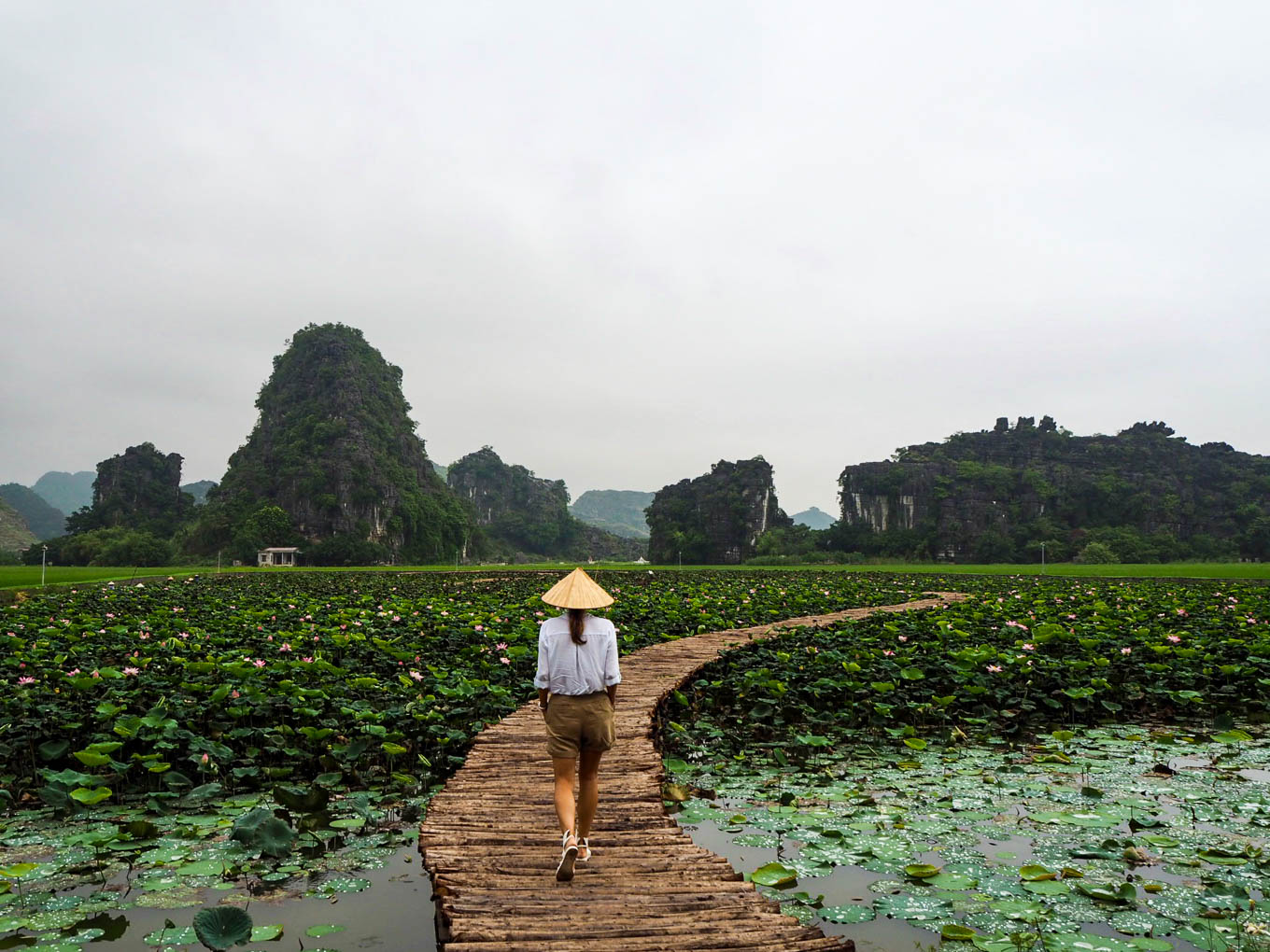
📍Hang Mua, Ninh Binh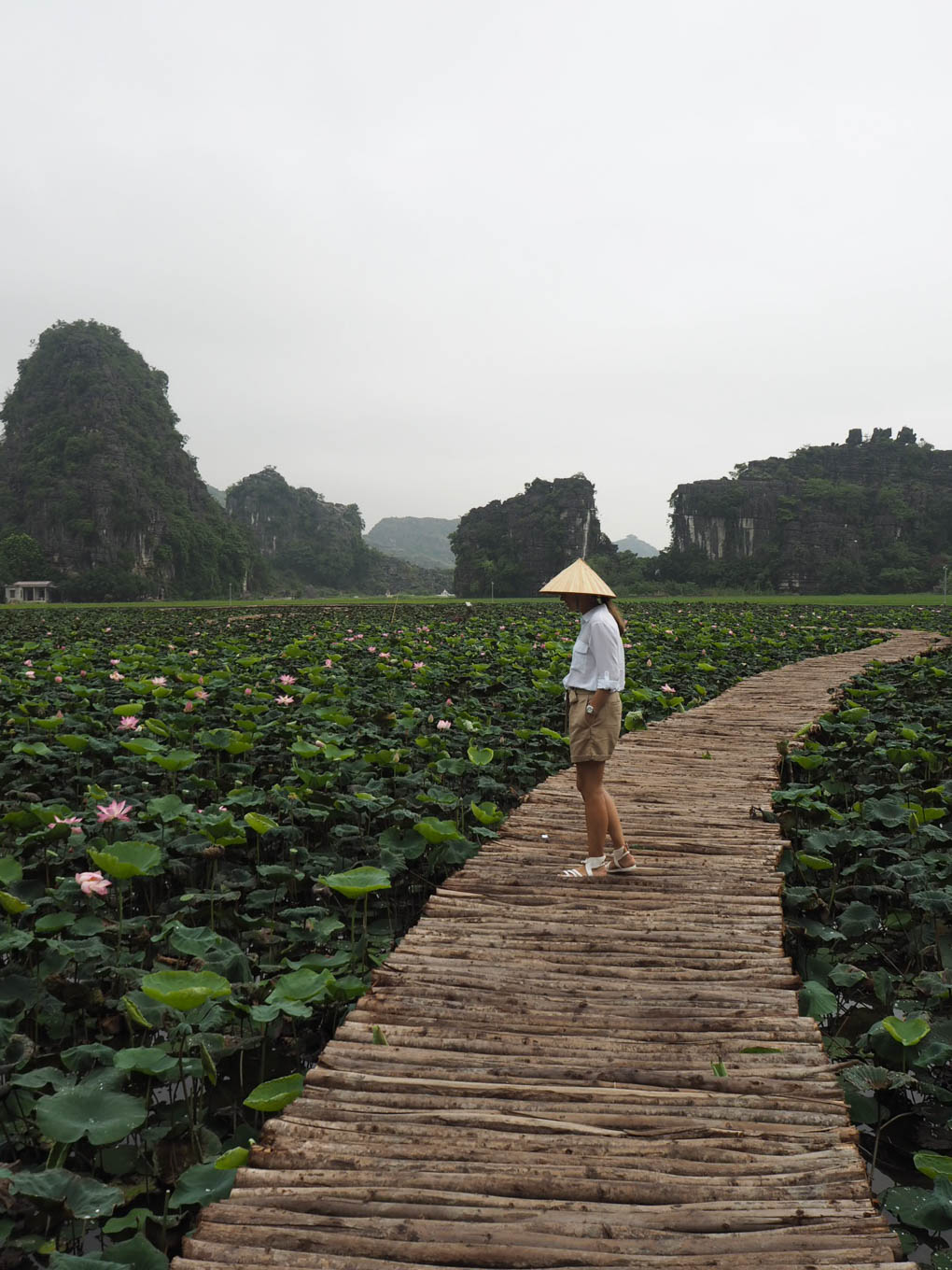 📍Hang Mua, Ninh Binh
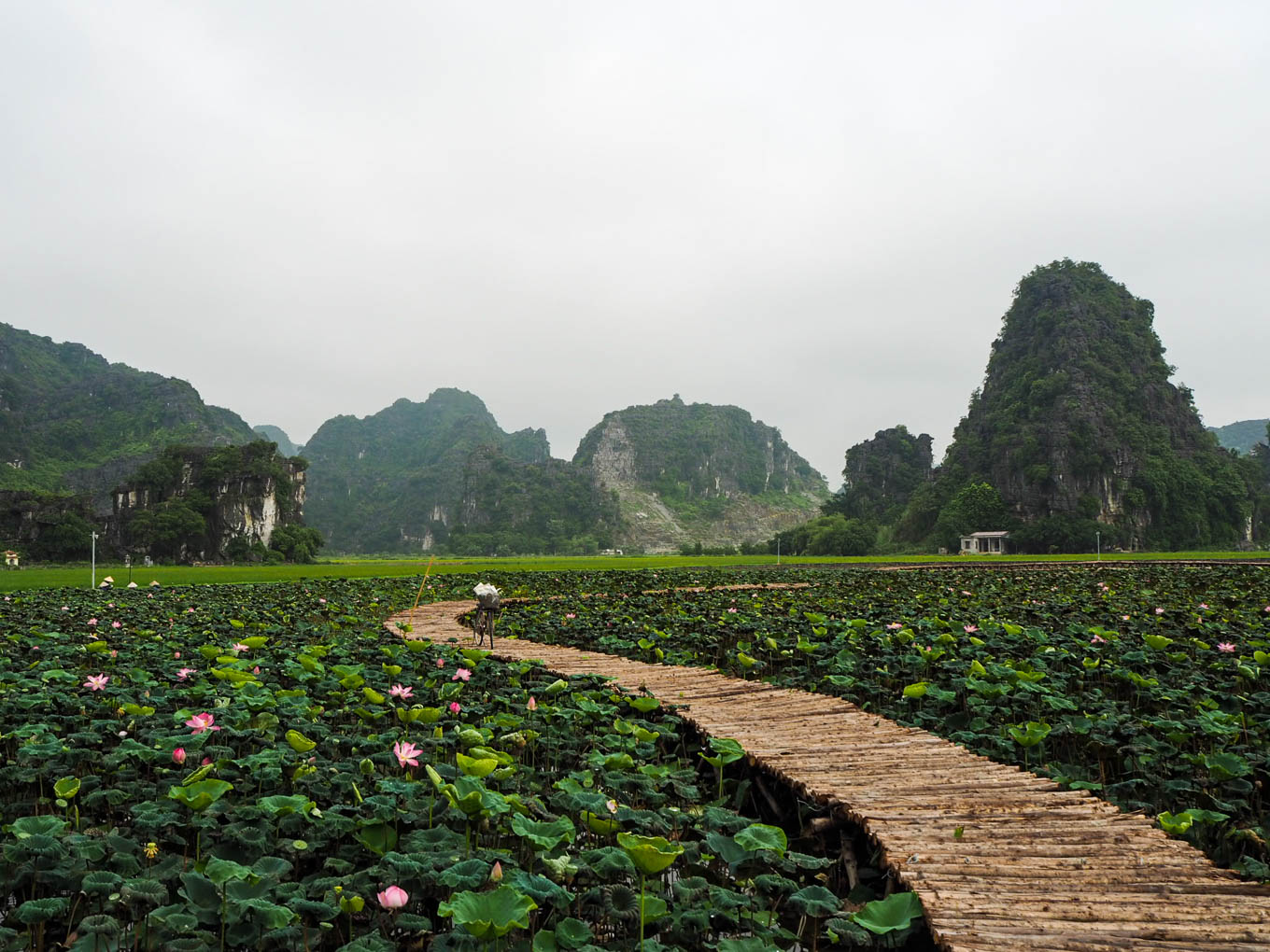 📍Hang Mua, Ninh Binh
MY NINH BINH 2-NIGHT ITINERARY: WHAT I MANAGED TO SEE
Like many travellers, I spent two nights in Ninh Binh. Arriving from Ha Long Bay and leaving for Sapa meant that we had one full day and two ‘half’ days in the area. I followed a fairly typical first-time Ninh Binh itinerary, packing several of the region’s best-known sights into that relatively short stay.
DAY 1: CHECK-IN & BAI DINH PAGODA
- Disembarked from our Ha Long Bay cruise late morning.
- Taxi to Ninh Binh (approx. 3½–4 hours).
- Checked into our Ninh Binh hotel.
- Bai Dinh Pagoda in the afternoon.
- Dinner at the hotel.
DAY 2: HANG MUA & TRANG AN
- Hang Mua climb in the morning.
- Lunch at a local restaurant.
- Trang An in the afternoon.
- Spa session and dinner at the hotel.
DAY 3: TAM COC & CHECK-OUT
- Taxi to Tam Coc in the morning.
- Check out from our Ninh Binh hotel.
- Taxi to Hanoi (approx. 2h).
- Onward to overnight train to Sapa.
So, in a surprisingly short amount of time, we covered several of Ninh Binh’s best-known sights. In one full day and two halves, we managed to visit Hang Mua, Trang An, Tam Coc and Bai Dinh.
I share the full story of my trip, including my thoughts on each experience, in my Ninh Binh journey post (coming soon).
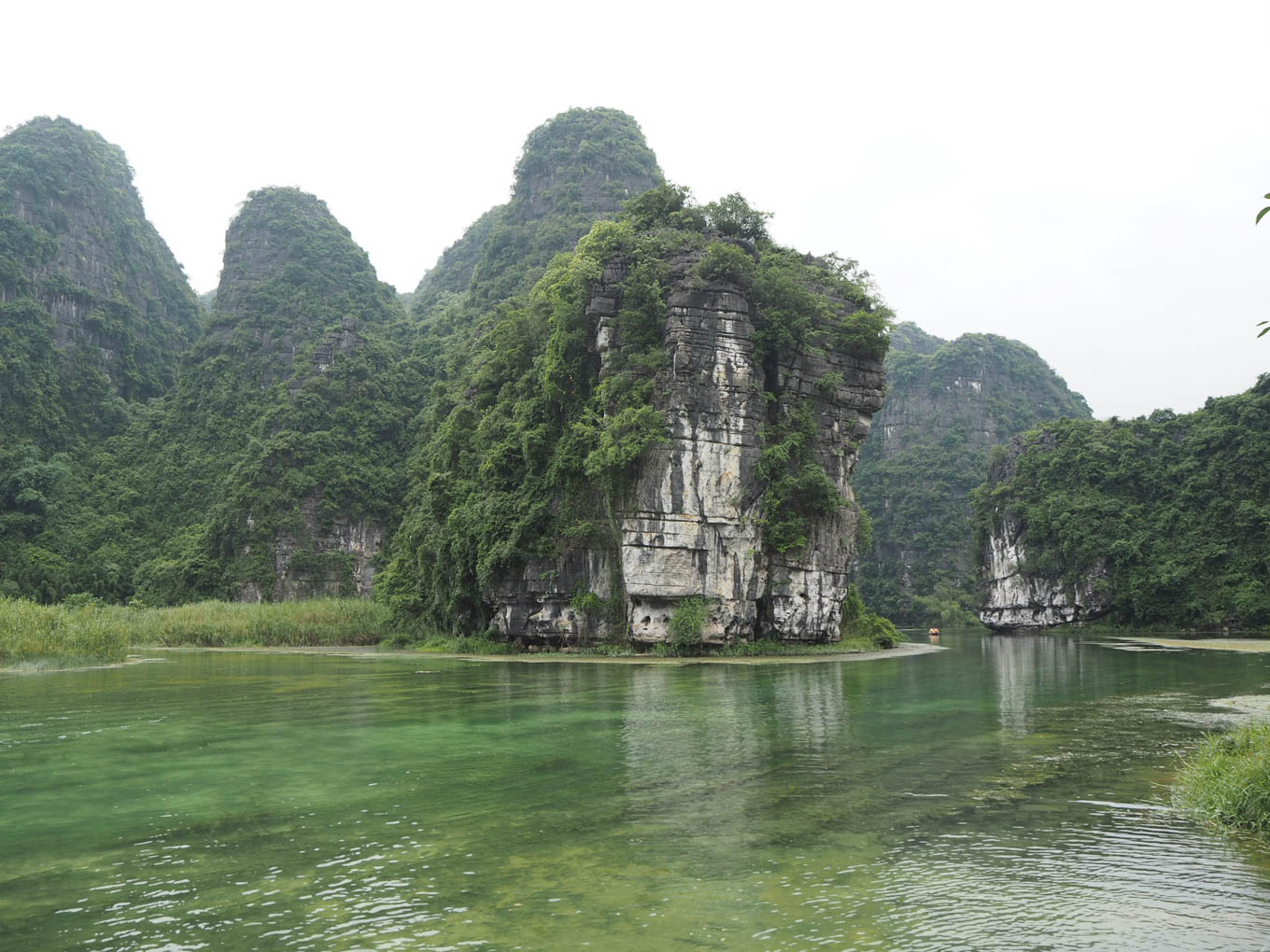
📍Trang An, Ninh Binh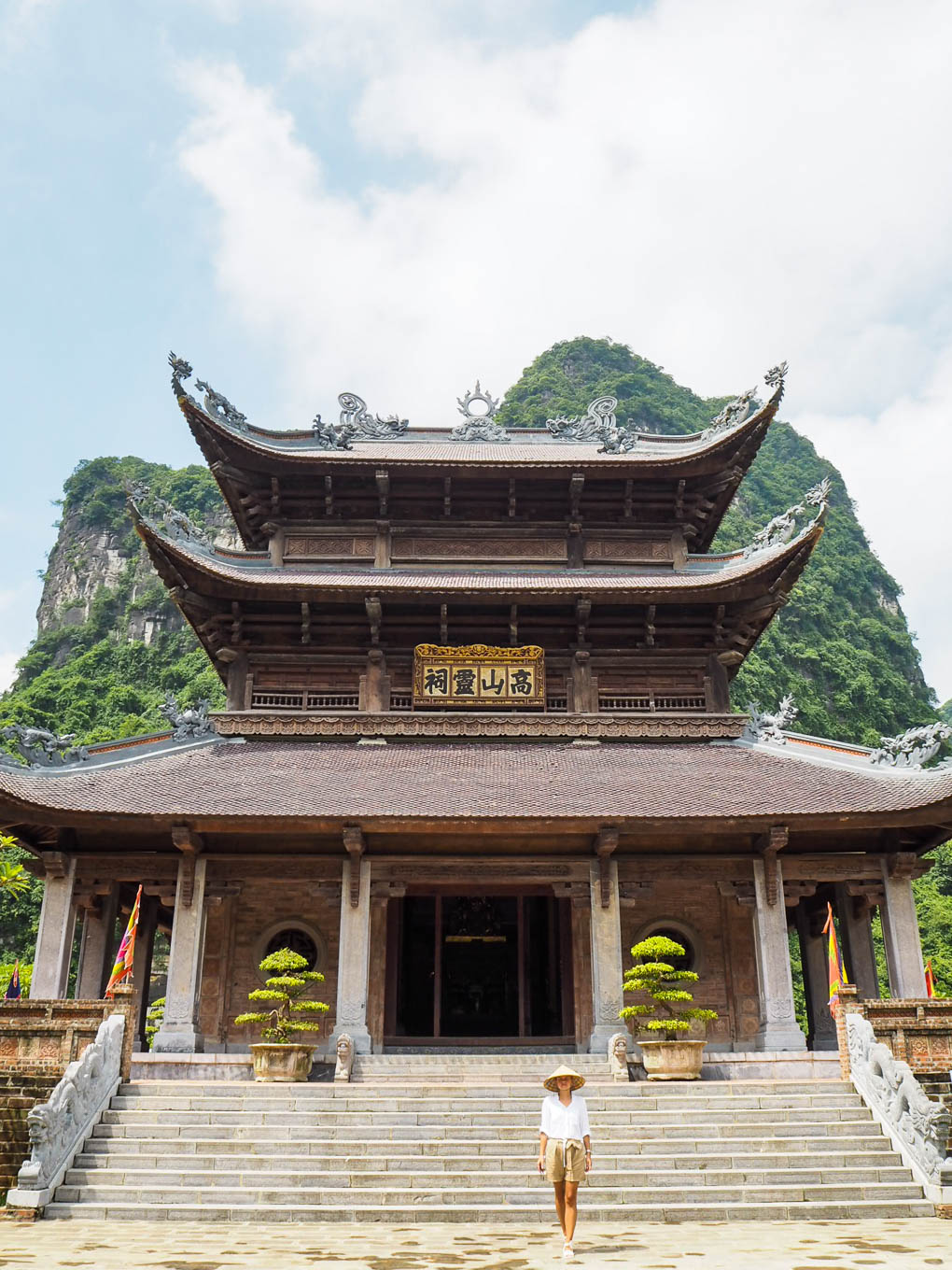 📍Trang An, Ninh Binh
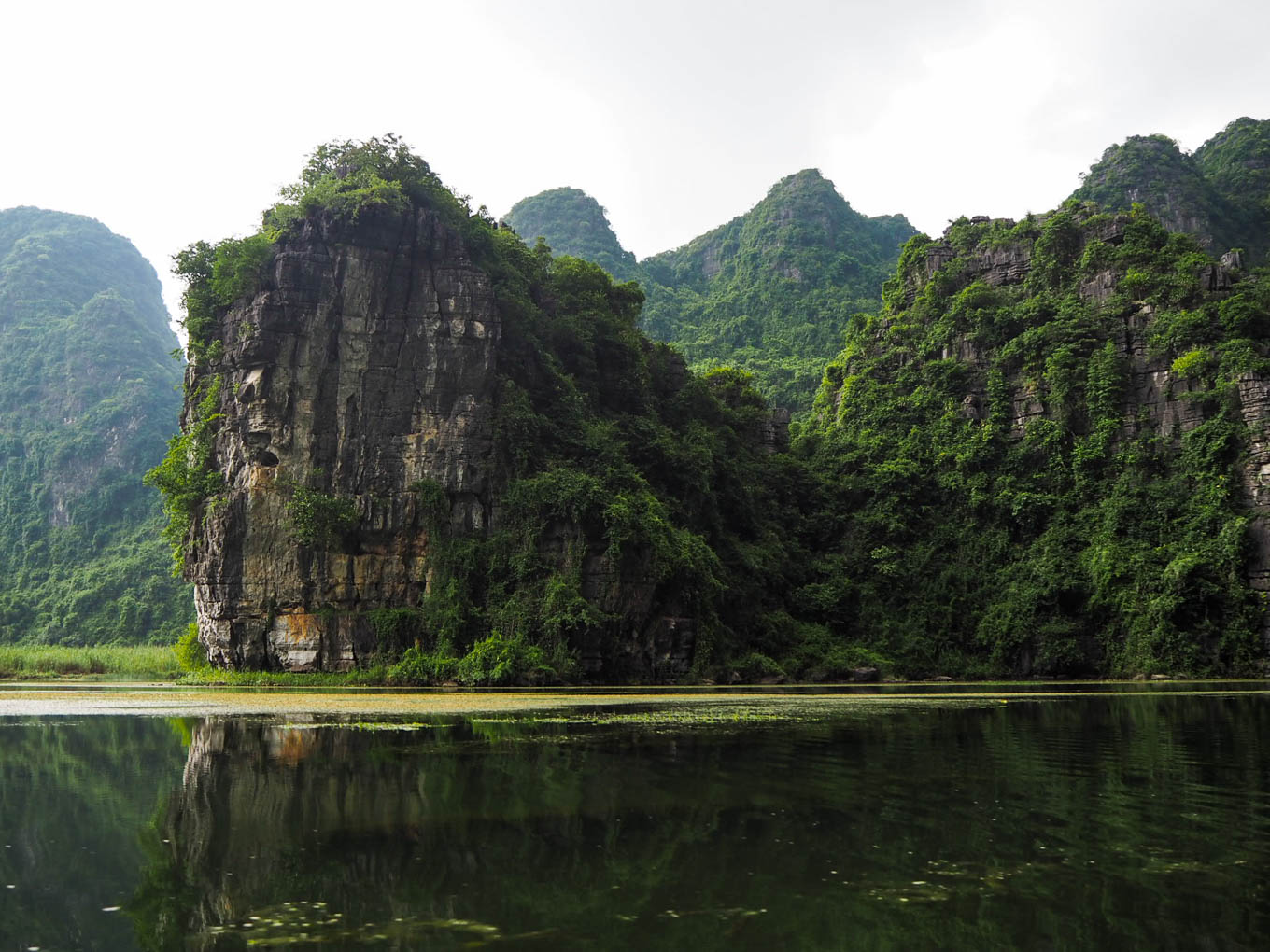 📍Trang An, Ninh Binh
MY NINH BINH 2-NIGHT ITINERARY: SHOULD YOU DO THE SAME?
In retrospect, I think the reason why our Ninh Binh itinerary was successful comes down to three things:
- We made maximum use of our one full day. We hired a local guide through our hotel who drove us around for the entire day. No time wasted faffing around on Google Maps to find the right entrance to each site or ticket booth, a nice restaurant nearby, and so on.
- Our accommodation happened to be strategically located. This was more good fortune than good planning! Our intention for our Ninh Binh trip was to enjoy the karst scenery, and Bai Dinh Pagoda wasn’t really on our list. Our hotel just happened to be right next to it. We popped in, had a long walk around and really enjoyed it!
The lesson here is that the location of your accommodation is worth considering carefully. Ideally, it should be well located for at least one of the two or three sites you plan to visit.
I have a separate post focusing on the best accommodation options in Ninh Binh (coming soon) discussing where you should base yourself, reviewing our hotel and providing more recommendations for your stay! Make sure to check it out! - We used private transport for the long journeys. Getting a private transfer from Ha Long Bay and back to Hanoi removed a lot of the waiting time involved with travelling by bus, ride share or train.
All in all, if you prefer to travel at a slower pace (which I usually do, but clearly I ignored my own advice here), have time to explore local restaurants and cafés, or just don’t wish to be ‘chauffeured’ around everywhere, you might want to consider seeing less or staying an extra night.
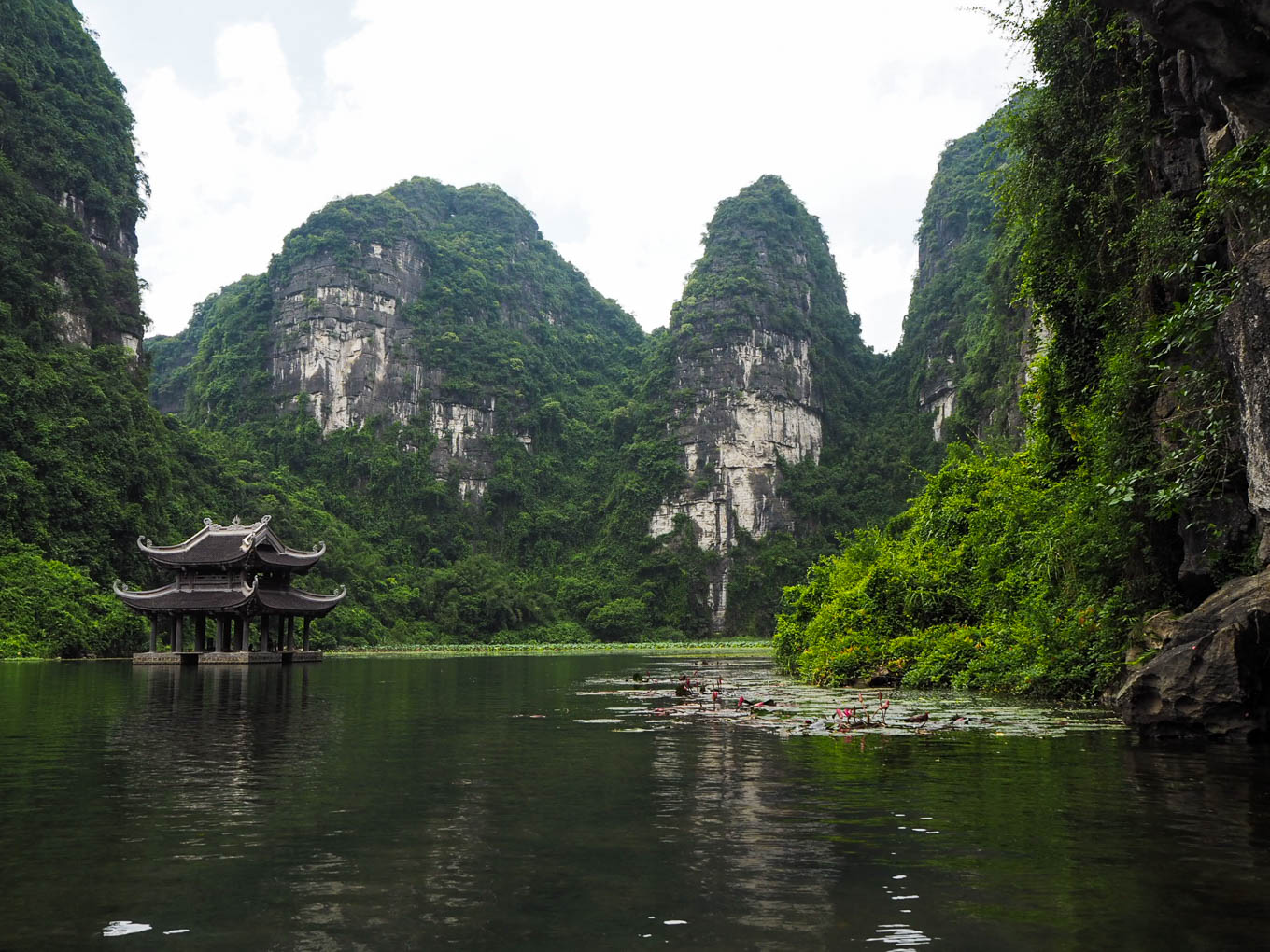
📍Trang An, Ninh Binh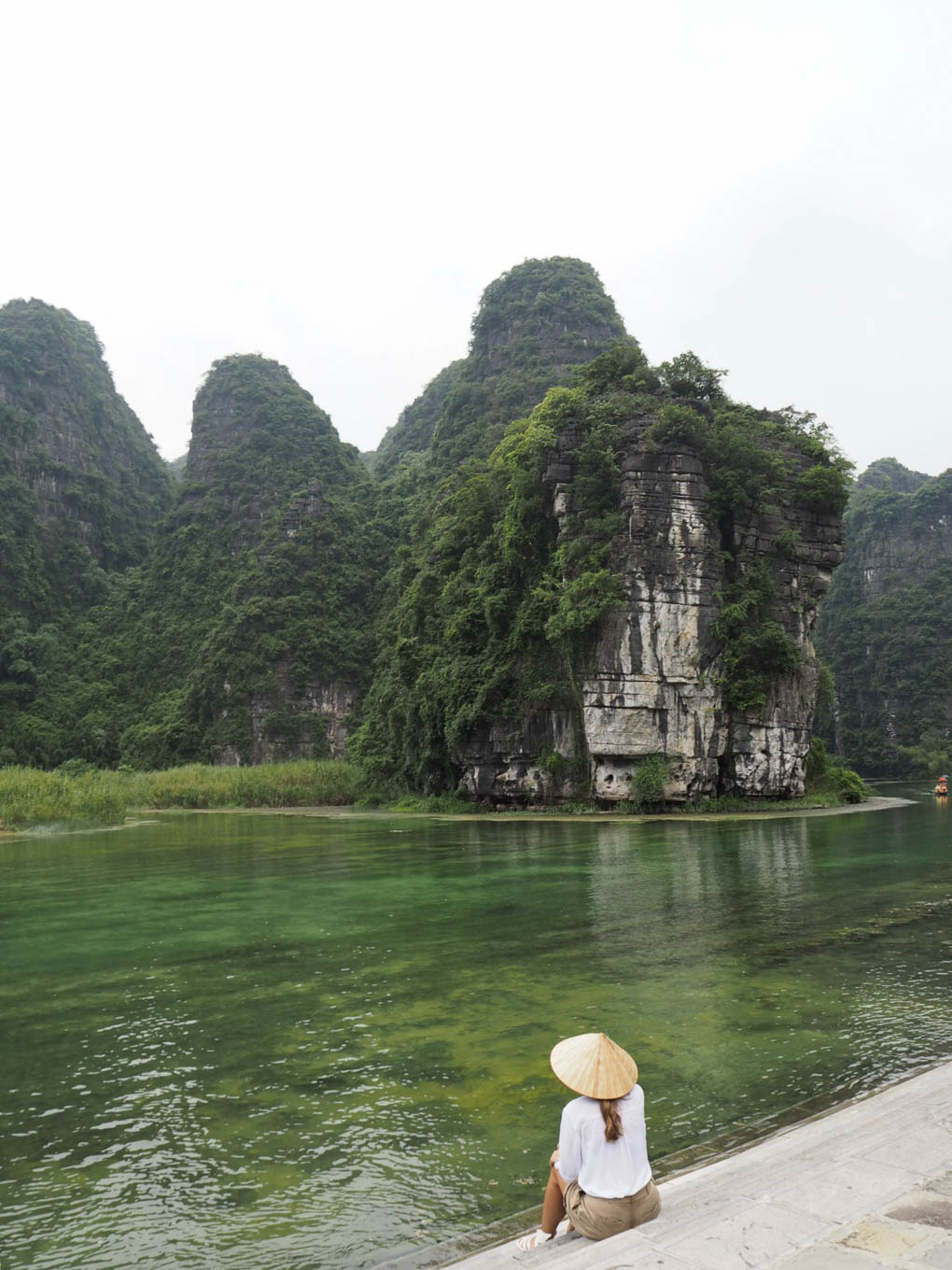 📍Trang An, Ninh Binh
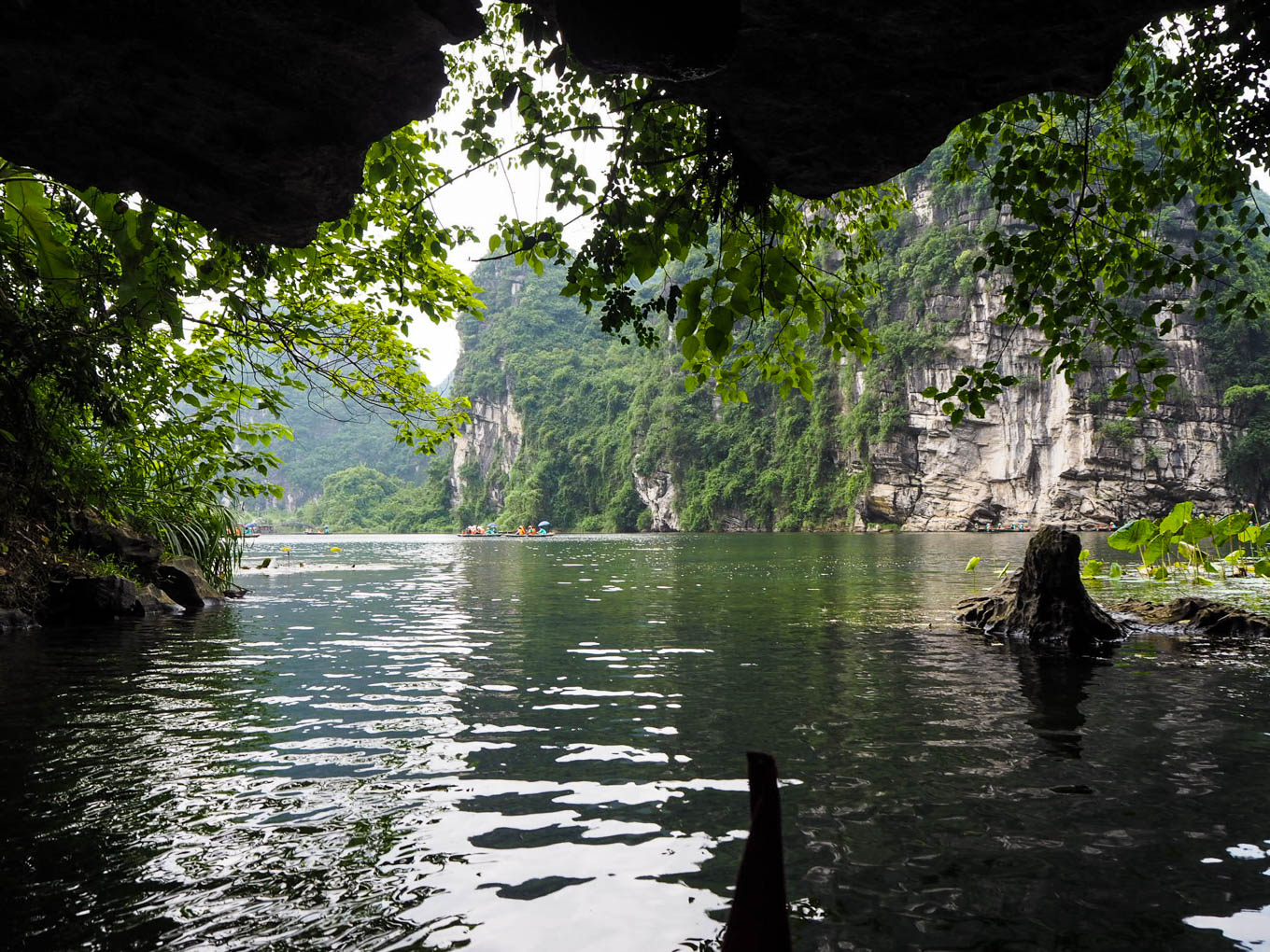 📍Trang An, Ninh Binh
HOW MANY DAYS DO YOU NEED IN NINH BINH?
I think by now I have successfully demonstrated the difference between ‘What you can physically fit into a two night stay’ VS ‘How long I would recommend you stay’!
If you are visiting Ninh Binh primarily for the karst scenery, and are not particularly interested in temples, history or wildlife, two full days should be enough to experience the main highlights. However, you will still need to plan your days reasonably efficiently if you want to fit in the main boat trips, Hang Mua and some time exploring the countryside.
If you have three full days, I think you’ll have a much more comfortable experience exploring Trang An, Hang Mua and Tam Coc. You will also have time for one of the historical sites from the 2nd tier of the sightseeing list above.
On the other hand, if you are interested in unique flora and fauna, you should definitely allow more time in Ninh Binh. Have a look at the sites I have included in the third tier of the list above and see if anything tickles your fancy. A visit to Cuc Phuong National Park or Van Long Nature Reserve, for example, is going to require a rather different approach to a short first-time visit focused on Trang An, Tam Coc and Hang Mua.
So, my recommendation? Allow two full days for a first visit if the classic Ninh Binh experience is what you’re after. Add a third day if you want to slow down, explore further or simply give yourself more breathing room. If you have particular interests in nature, wildlife or history, you can easily fill a fourth day or more.
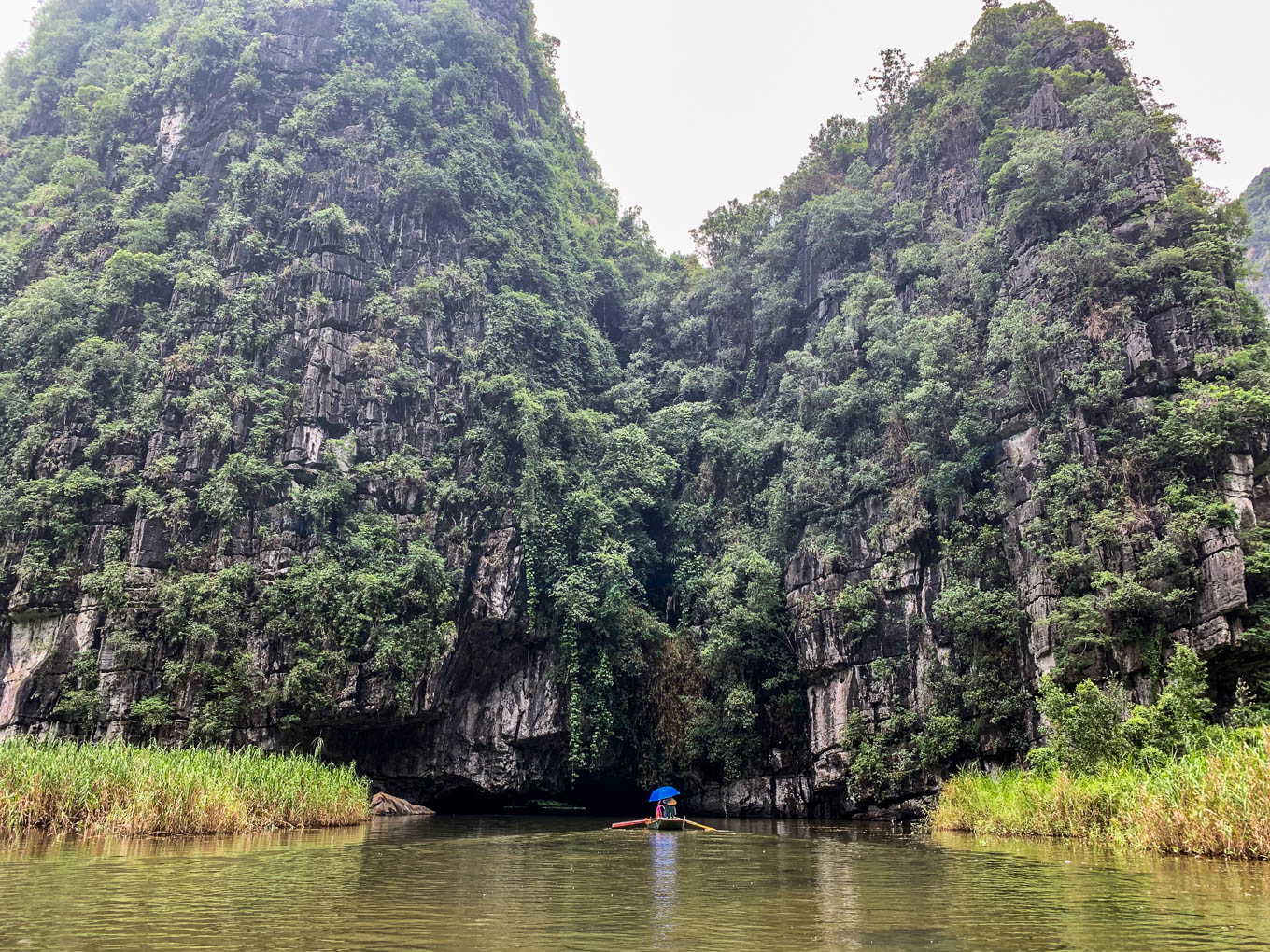 📍Tam Coc, Ninh Binh
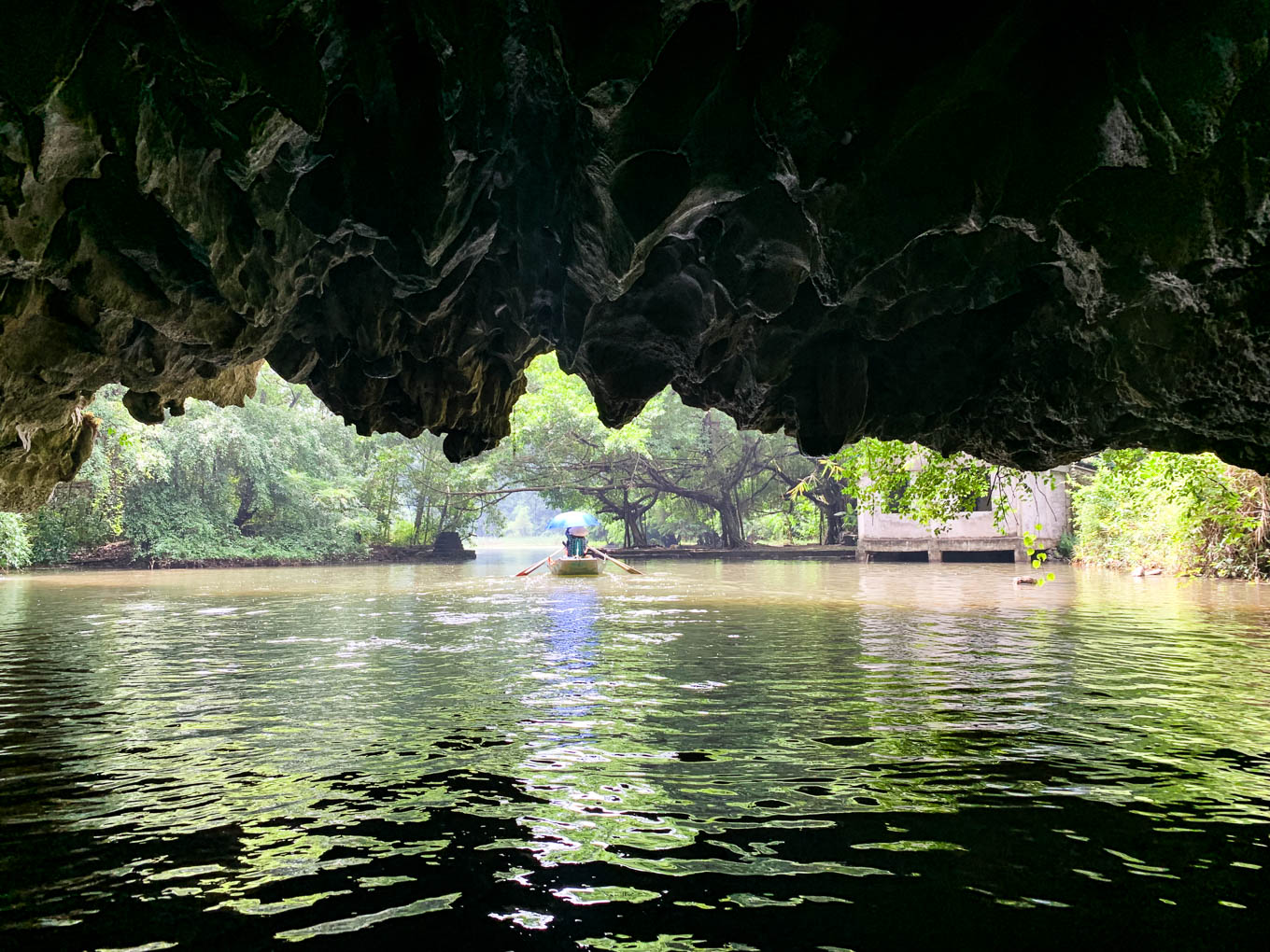 📍Tam Coc, Ninh Binh
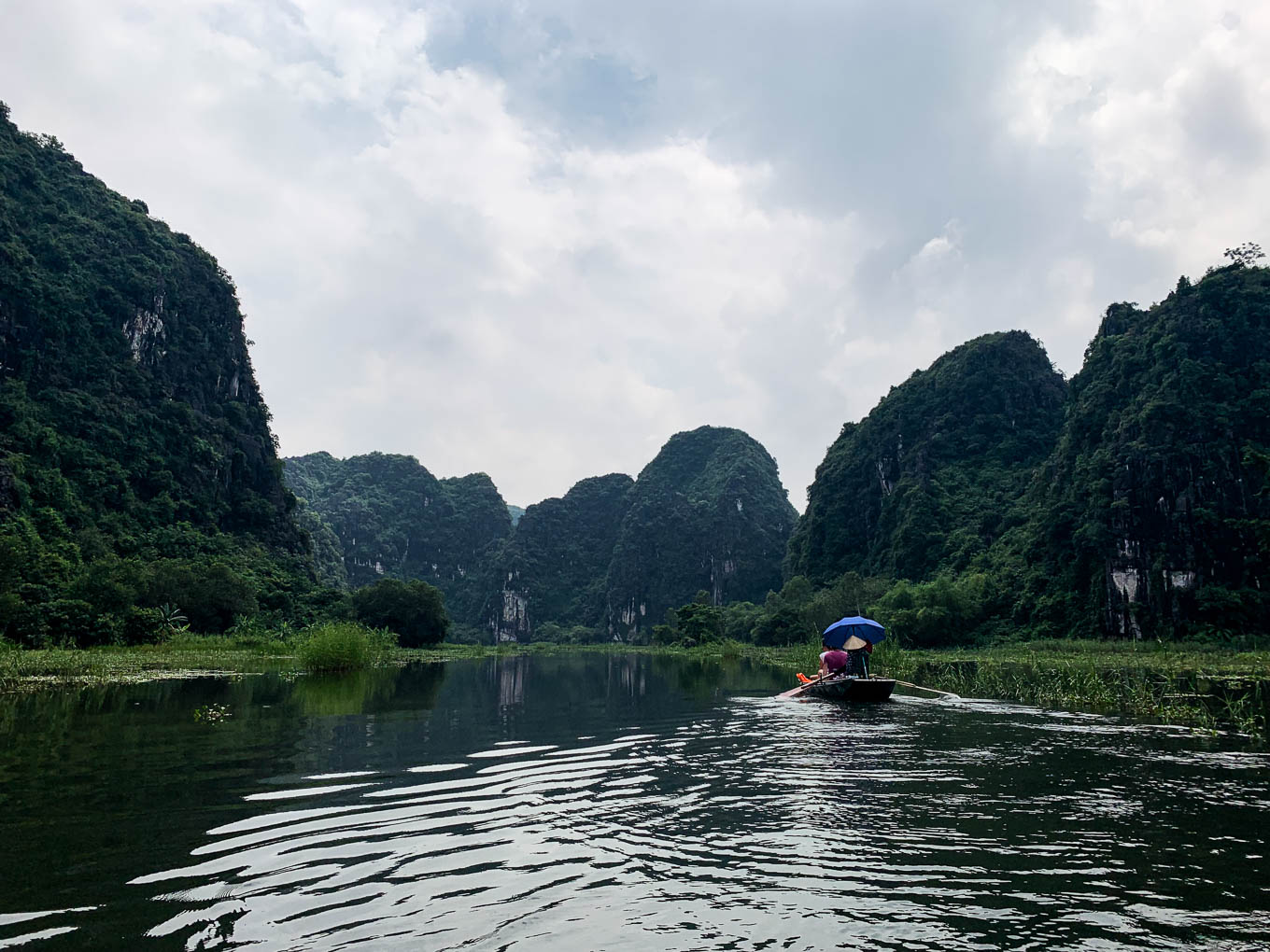 📍Tam Coc, Ninh Binh
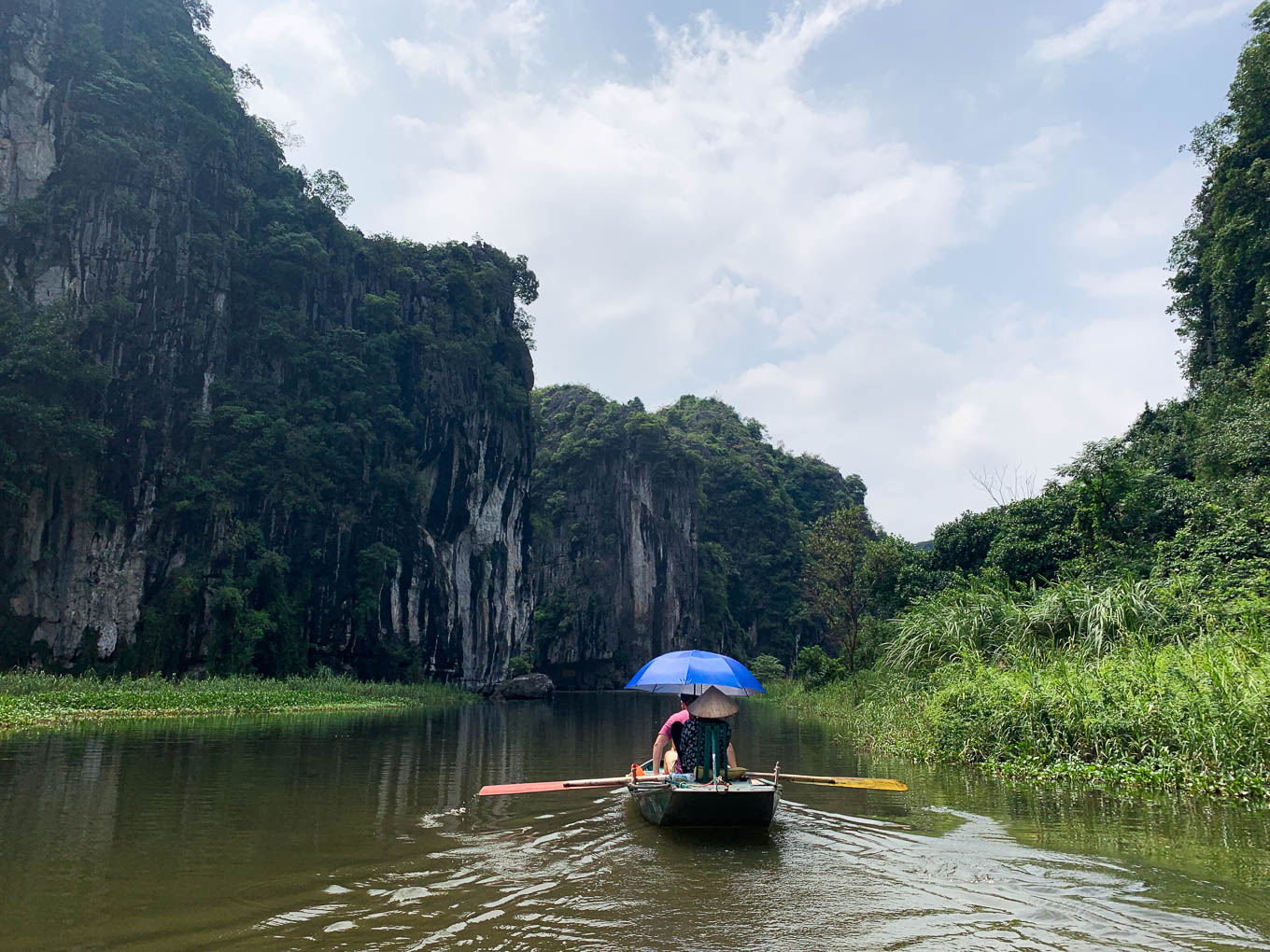 📍Tam Coc, Ninh Binh
WHEN IS THE BEST TIME TO GO?
Ninh Binh looks different throughout the year. Rather than declaring one season the ‘best’, here are a few of the landscapes you can time your visit to see.
For the greenest rice fields: March – April.
The new rice crop is growing and the landscape is at its lushest.
For golden rice: Late May – early June.
The rice fields around Tam Coc turn golden before harvest. This is a short window and the exact timing varies from year to year.
For lush autumn scenery: September – October.
The landscape remains green and the rice fields can be particularly attractive. I visited in early September, and I loved it. The scenery was green and it was hot (around 30°C / 86°F) but bearable.
For misty landscapes: November – December.
Cooler conditions can bring morning mist to the rivers, valleys and limestone karsts.
For flooded fields and reflections: Around January – February.
Some paddies may be flooded or being prepared for the next rice crop, creating beautiful reflections of the limestone karsts. The exact timing varies with the agricultural cycle.
If you’re particularly interested in how the landscape changes throughout the year, the Ninh Binh Tourism Department has useful seasonal information and photography worth checking before you book. Need more information on temperature range, rainfall and the climate of Vietnam by area? I have covered that information, by region, in my Vietnam Homepage (coming soon).
I visited in September and loved it, so I wouldn’t automatically choose the famous golden season over autumn. Also, a rain forecast may not be the worst thing. We had a spell of heavy rain during our Trang A boat trip in September. However, the gentleman rowing the boat did not stop; we wore our raincoats, and simply carried on. The rain stopped while we still had plenty of the journey left. I dare say, it made our boat ride even more memorable!
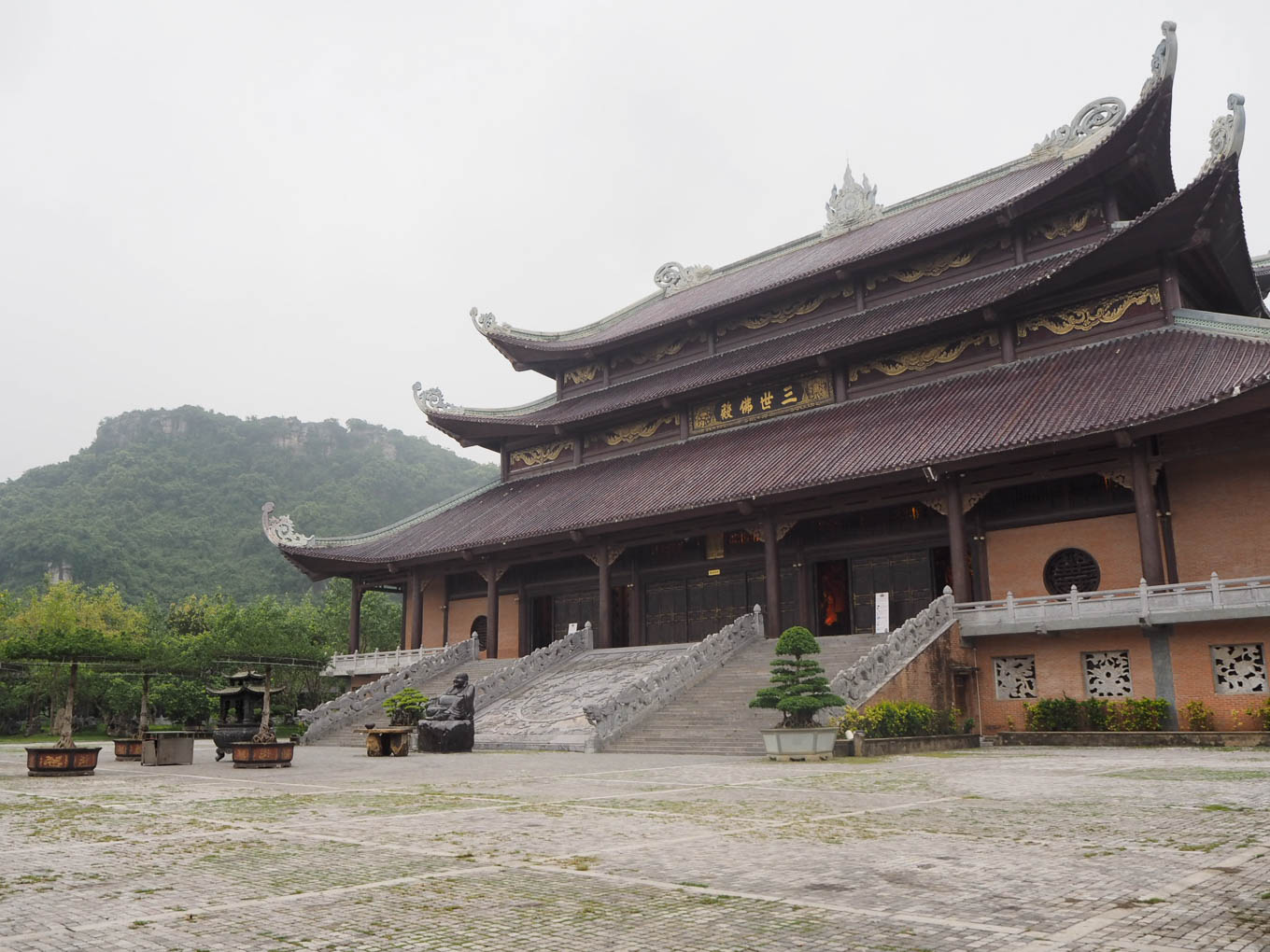 📍Bai Dinh, Ninh Binh
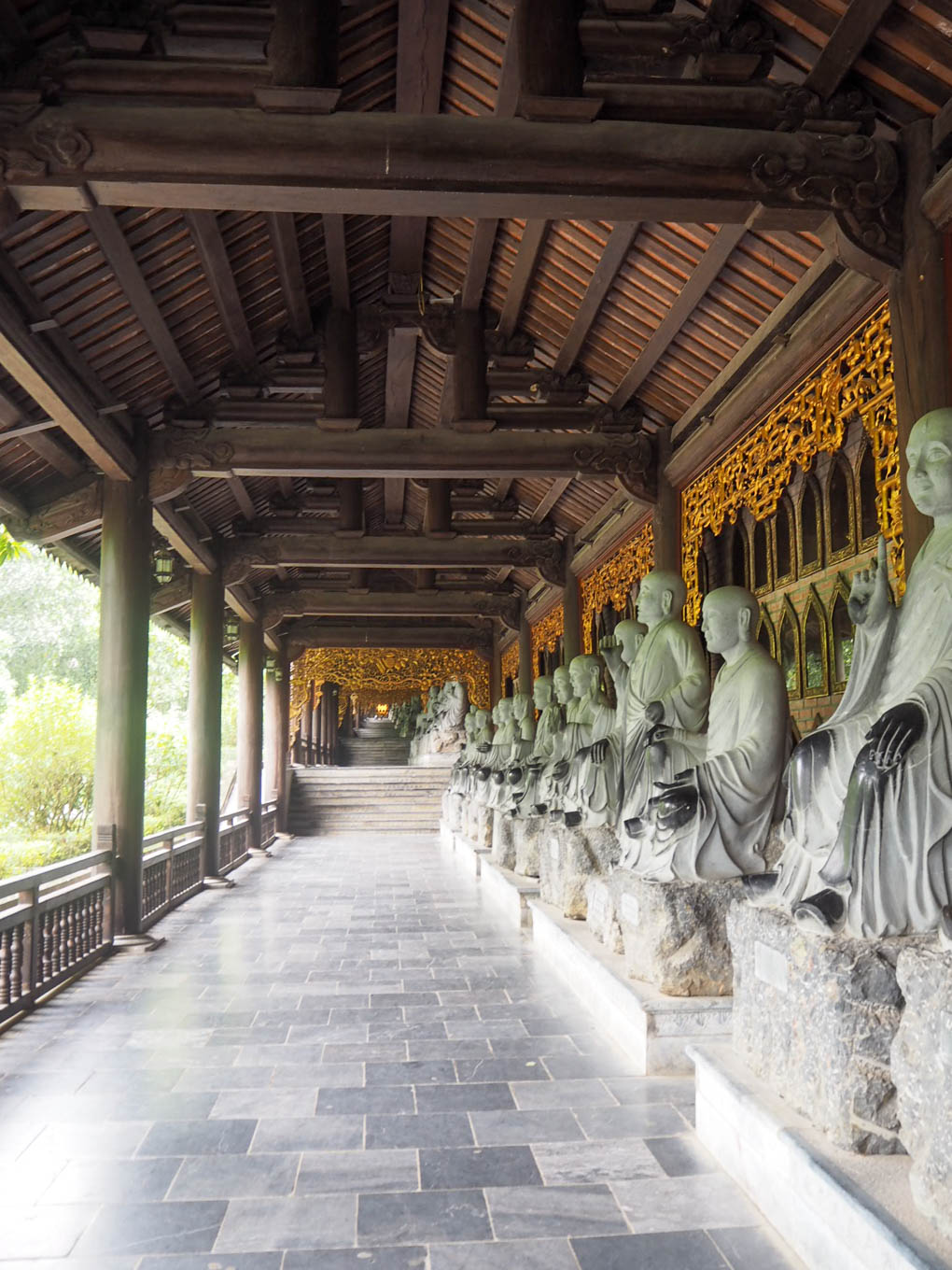 📍Bai Dinh, Ninh Binh
 📍Bai Dinh, Ninh Binh
HOW TO GET TO NINH BINH?
GETTING TO NINH BINH FROM HANOI & THE NORTH OF VIETNAM
Ninh Binh is relatively easy to reach from Hanoi, with several transport options available.
For me, the biggest consideration isn’t actually the journey time. It’s where you’re staying. Ninh Binh’s attractions are spread out, and arriving at a railway station in Ninh Binh city isn’t necessarily the same thing as arriving at your hotel in Tam Coc or the countryside.
So when comparing transport options, look at the whole journey from your starting point to your accommodation, rather than simply comparing the headline travel time.
BY PRIVATE TRANSFER
If you’re travelling as a couple or small group and value convenience, a private transfer is probably the easiest option. You can travel directly from your Hanoi accommodation to your hotel in Ninh Binh (approx 2h), without having to deal with stations or arrange a second transfer when you arrive.
This is how I travelled to Ninh Binh direct from the port in Ha Long Bay. Rather than taking the train, we arranged a private transfer through a local travel agent in Hanoi. The same agent also arranged our Sapa train tickets (and return bus), so having one person organise several of our journeys made things quite straightforward.
Private transfers are not the cheapest (and prices vary). Nevertheless, they are still affordable (and nothing compared to private transfers of that length in Europe or North America).
BY TRAIN
Ninh Binh is well connected to Hanoi by rail, with direct trains taking around 2 hours. If you enjoy travelling by train, this is an inexpensive option and gives you the chance to see more of the Vietnamese countryside along the way. Note that Ninh Binh Railway Station is in Ninh Binh city, rather than in Tam Coc, Trang An or the countryside where most travellers stay.
Vietnam Railways operates the trains, but its English-language website isn’t particularly user-friendly. I find Baolau much easier for checking schedules and booking Vietnamese trains.
BY BUS
Apart from the train, other inexpensive options are buses and shared limousine vans operating between Hanoi and Ninh Binh, including services aimed at travellers staying in Tam Coc and Trang An. There are plenty of operators and booking platforms available, but your hotel or a local brick and mortar travel agent should also be able to help.
GETTING TO NINH BINH FROM HUE / DA NANG & THE SOUTH OF VIETNAM
If you’re coming from Hue or Da Nang, the journey to Ninh Binh is considerably longer than travelling from Hanoi. In this case, I’d seriously consider taking an overnight sleeper train rather than treating the journey as something to get through.
From Da Nang, Ninh Binh is around 680 km (420miles) away by road, with a private car journey taking roughly 10-12 hours depending on stops and traffic. By train, the journey is around 14 hours. However, you can do much of that journey while you sleep.
There are standard sleeper cabins on Vietnam Railways services, as well as upgraded private cabins operated by specialist tourist-train companies. For example, the evening SE20 service currently leaves Da Nang at around 18:00 and arrives in Ninh Binh shortly before 08:00 the following morning.
For me, that sounds considerably more appealing than spending most of a day in a car or bus.
If you’re travelling this route, I’d use Baolau to research the options. It’s particularly useful because you can compare the different trains, departure times and available sleeper classes in one place, including the upgraded cabins.
This is actually an option I’m considering for a future second trip to Vietnam, and I’ll update this guide once I’ve tried it!
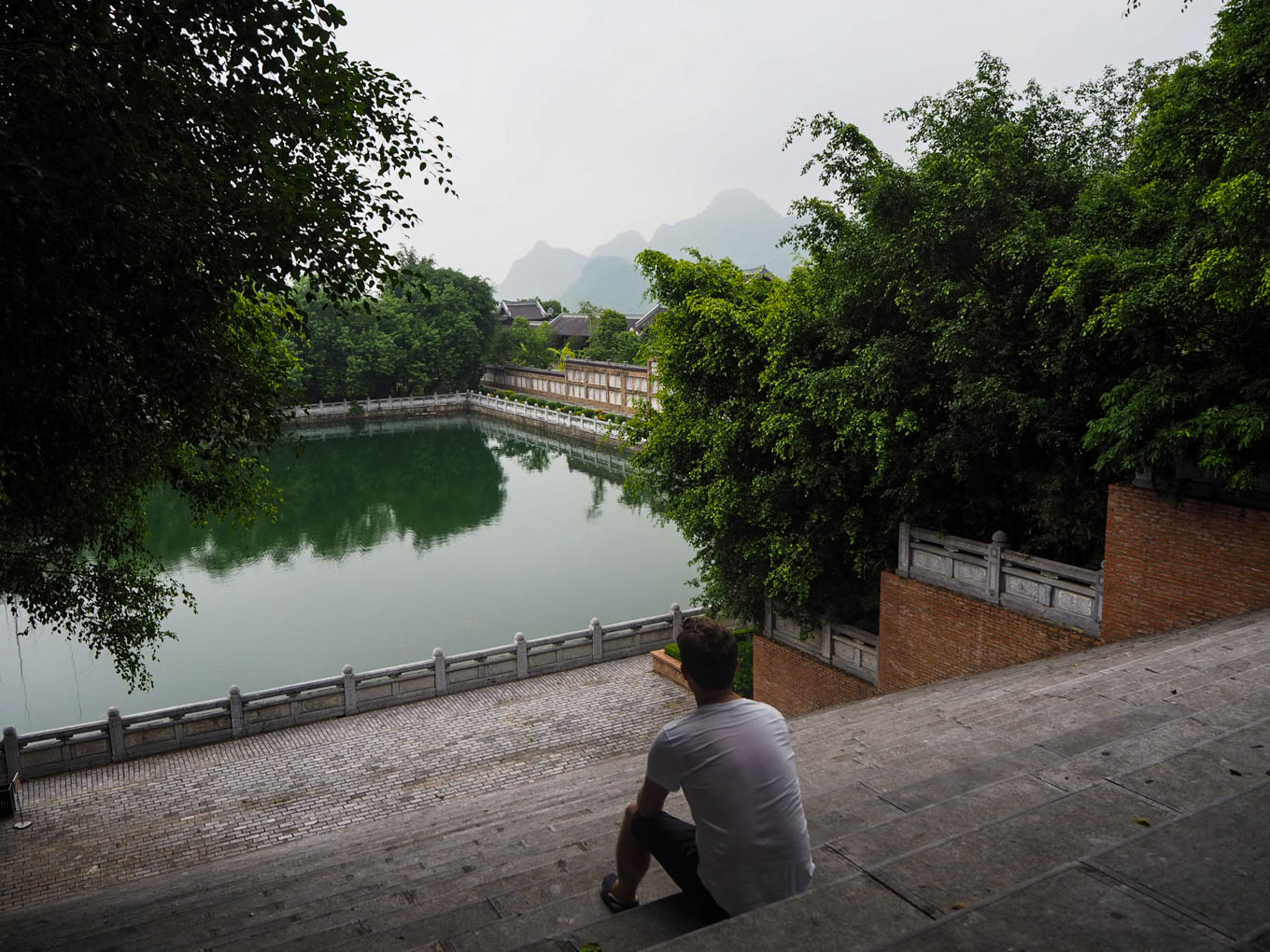 📍Bai Dinh, Ninh Binh
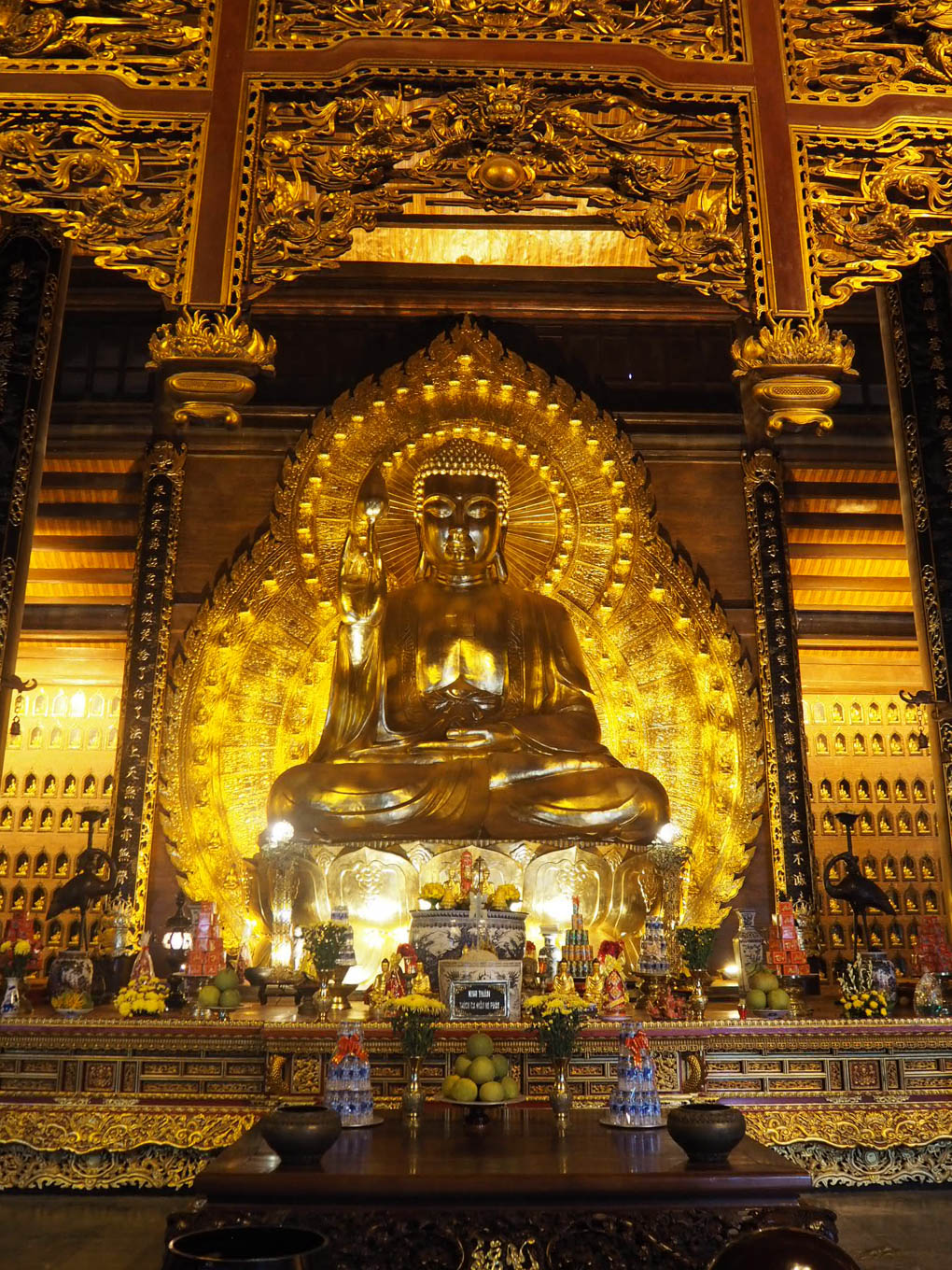 📍Bai Dinh, Ninh Binh
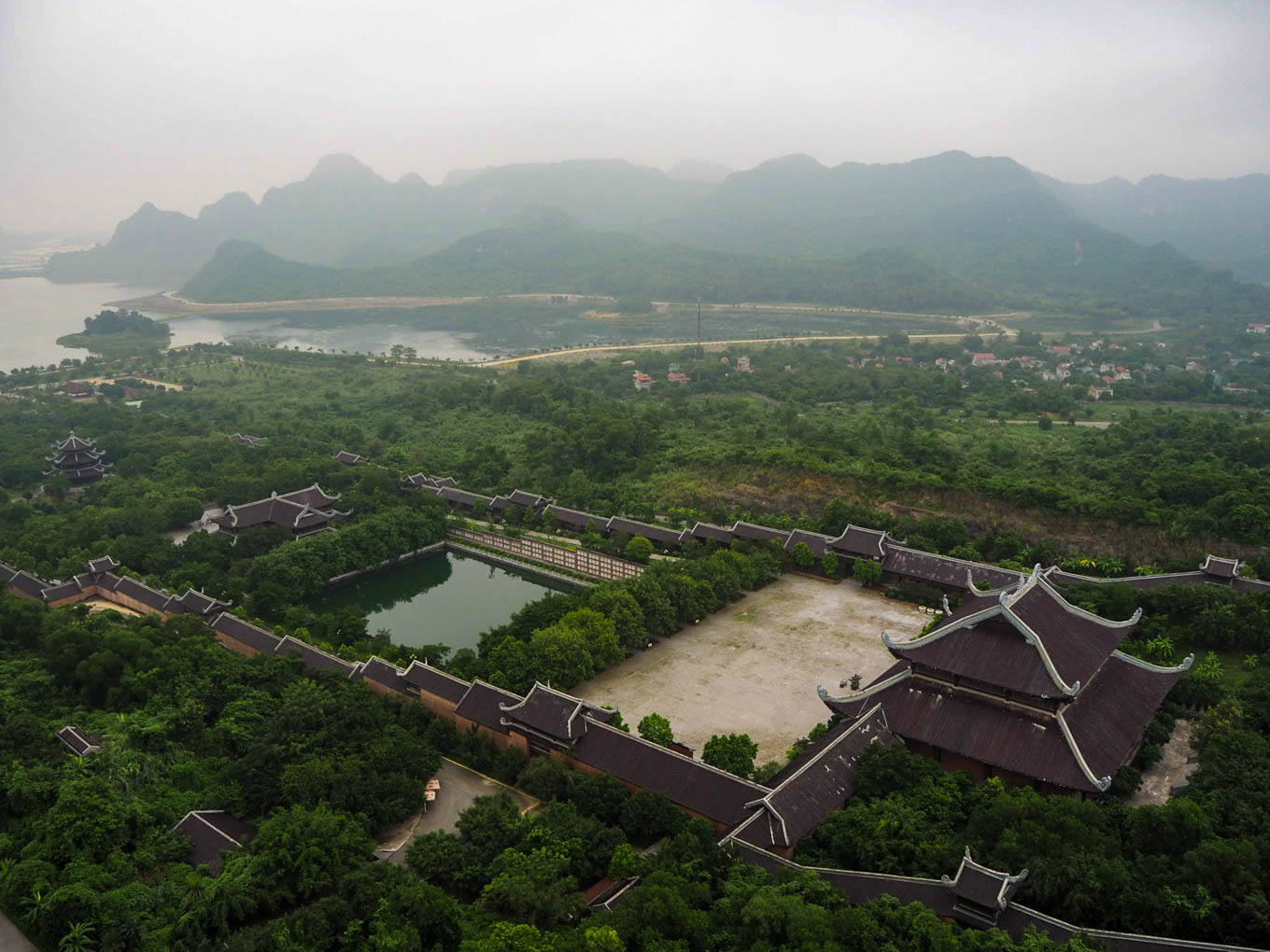 📍Bai Dinh, Ninh Binh
HOW DO YOU GET AROUND NINH BINH?
This is where planning a Ninh Binh trip becomes slightly more complicated.
The attractions aren’t all clustered around one town, so you can’t simply walk between the main sights. You’ll need some form of transport for most itineraries.
PRIVATE CAR OR DRIVER
For a first visit, particularly if you have limited time, a private car with a driver is probably the easiest option.
This is what we used for our full day in Ninh Binh. Having someone drive us between the different sights meant we didn’t have to think about directions, parking, finding entrances or working out how to get from one attraction to the next.
Our driver was also a local guide, which added another dimension to the day. He was able to tell us about the places we were visiting, answer our questions and, perhaps more interestingly, give us an insight into everyday life in Vietnam. We ended up chatting about all sorts of things as we travelled between the sights, which made the experience feel much more personal than simply being driven around.
It also made it much easier to combine several sights in one day.
We found our local guide & driver through our hotel, and we paid less than $100 for the entire day. In my experience, most hotels and guesthouses in Vietnam are happy to arrange drivers and tour guides for you, especially if you give them a day’s or so notice.
TAXI OR GRAB
Grab operates in Ninh Binh, making it a useful option for shorter journeys if you’re travelling independently. However, availability can be less predictable once you’re further out in the countryside, so I wouldn’t rely on it for a tightly planned day of sightseeing.
For individual journeys, a local taxi can also be an option which we actually used to get to Tam Coc and back on our last day in the area.
CYCLING
Cycling is another popular way to explore the countryside around Ninh Binh, particularly around Tam Coc, where there are quieter roads through the rice fields and villages.
However, there aren’t dedicated cycle lanes throughout the area, so you’ll share the road with other traffic on the busier routes.
SO, WHAT WOULD I DO?
If you have two full days or less, I’d prioritise convenience and consider hiring a driver for at least one full sightseeing day.
If you have three or more days, you have more freedom to slow down and mix different forms of transport -perhaps using a car for longer journeys and cycling or walking when exploring the countryside around your accommodation.
And if you are staying somewhere particularly beautiful, don’t underestimate the value of simply leaving some time to enjoy the hotel. You don’t have to turn every hour in Ninh Binh into another sightseeing excursion.
FINAL THOUGHTS: PLANNING YOUR NINH BINH TRIP
Ninh Binh isn’t particularly difficult to visit. It’s just slightly more complicated to plan than it first appears.
There are enough attractions, boat routes and possible bases to make the choices feel overwhelming, but you really don’t need to see everything.
For a first visit, I’d allow an absolute minimum of two full days. And be prepared for those two days to be fairly full if you want to see the main sights. If you have longer, even better, you’ll have more flexibility to slow down and enjoy the landscape and your surroundings.
The biggest lesson I took from my own trip is that Ninh Binh rewards a little planning, but not over-planning. Work out where you want to stay, decide which experiences matter most to you and think about how you’ll get between them. Then leave yourself some time to simply enjoy the scenery…
This is not a sponsored post and I am not affiliated with any of the businesses or organisations mentioned.
A DEEP DIVE INTO VIETNAM
Looking for more travel guides for Vietnam? Or maybe just tips, inspiration and practical advice for effortless travel in Southeast Asia? Hit the buttons below!
___