Published: 9th of November 2026.
This is not a sponsored post & I am not affiliated with any of the hotels, restaurants or organisations mentioned.

For some people, the holiday starts when they arrive at their hotel. For me, it starts much earlier, at the airport.
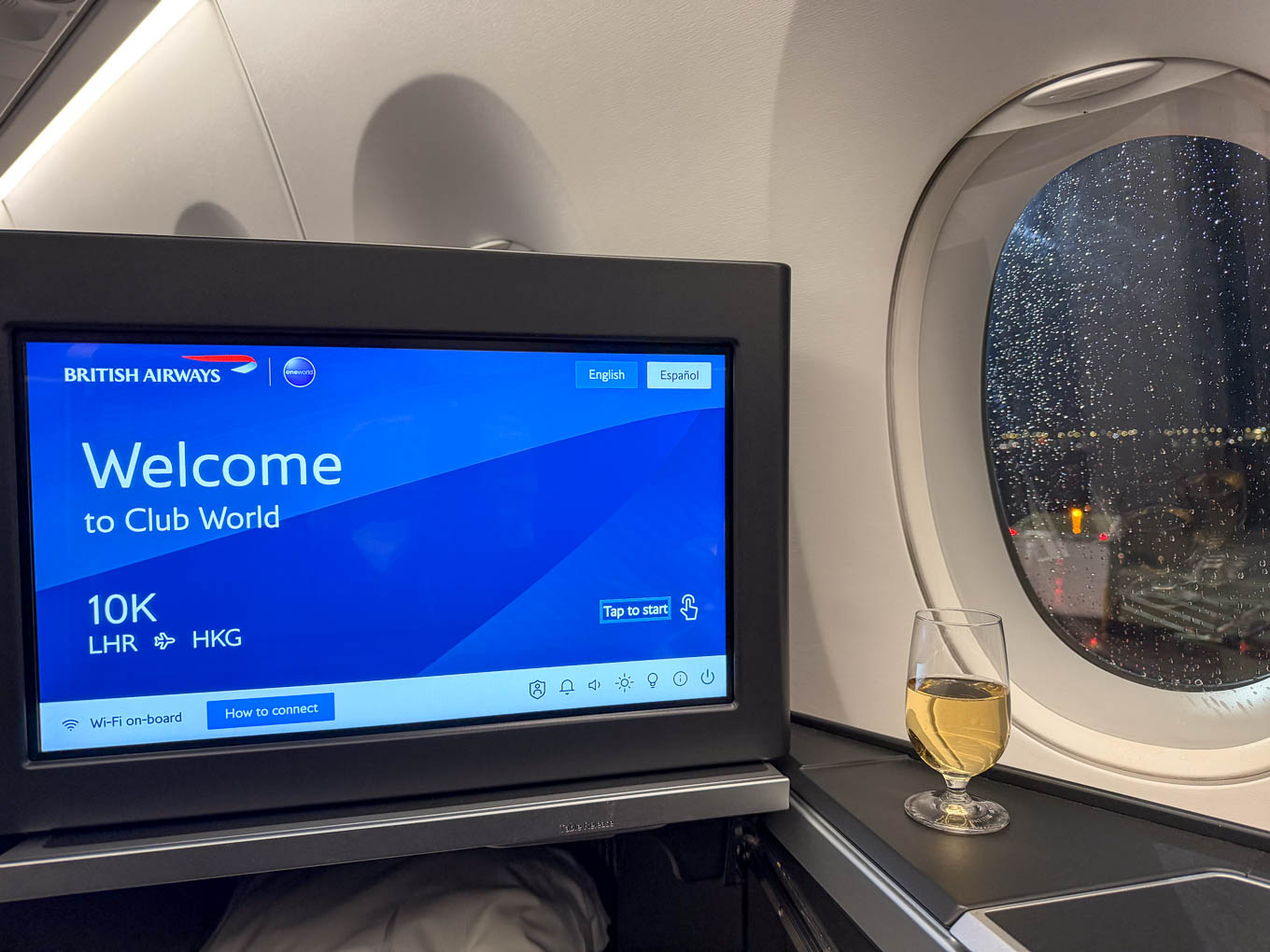
After experiencing a business-class flight from London to Hong Kong booked using points, I realised just how much the journey itself can influence the whole travel experience. For me, travelling in business class on a long-haul flight is not about being fancy and indulging in unnecessary luxury. This is about being able to get a proper night’s sleep and arrive at your destination feeling relatively human, rather than spending the first day or two of your holiday recovering from the flight.
The experience left me with one rather ambitious thought. How could I make this happen not once every five years, but for every single long-haul flight I take?
And so began my journey into the world of points and miles. What initially seemed like a fairly simple way of getting more out of our everyday spending turned out to be a considerably more complicated affair. Between airline loyalty programmes, credit card rewards and the endless search for award seats, there’s quite a lot to get your head around!
The internet is full of stories about people flying business class for next to nothing, but there are a few things those success stories don’t always tell you. So, having started to explore this world myself, I thought I’d share some of the realities I’ve been discovering along the way.
No 1. YOU NEED A SUSTAINABLE WAY OF ACCUMULATING POINTS
Unless you are a true frequent flyer, relying on airline loyalty miles accumulated through flying alone is unlikely to get you very far.
For most people, building a meaningful points balance means combining flying with credit card rewards. This could involve putting eligible everyday spending on a rewards card, taking advantage of welcome bonuses and keeping an eye on promotional offers that can accelerate your points balance.
Of course, this only makes sense if you approach it sensibly. You need to have sufficient eligible spending to make the rewards worthwhile, and you should always pay off your balance in full rather than incur interest in pursuit of points. The idea is to make your credit card work for you, not the other way around.
Buying points outright is also a strategy that many people use but, timing is of the essence. Airlines regularly run promotions offering bonus points or discounts on points purchases, which can make buying points more attractive. However, this only really makes sense when you know there are award seats available and you have worked out that buying the points, together with any taxes and surcharges, will cost less than paying for the flight outright.
There’s little point earning enough points for a business-class flight, if you’ve incurred unnecessary costs or debt to get there.
FOR THE BEGINNER: WHAT ARE AWARD SEATS?
Award seats are the seats that airlines make available to passengers booking with points rather than paying the full cash fare. They are not necessarily all the seats left on a flight: airlines generally release a limited number of seats for redemption, and availability can vary depending on the route, date, airline and demand.
This is why having enough points for a business-class ticket doesn’t automatically mean you’ll be able to book one. You still need to find a flight on which the airline has made award seats available.

No 2. FLEXIBILITY IS THE REAL CURRENCY
One of the biggest misconceptions about flying business class with points is that once you have accumulated enough points, you can simply choose your destination, pick your dates and book a flight. Unfortunately, it doesn’t quite work like that.
Award seats are limited, and finding availability can be the hardest part of the whole exercise. You may need to be flexible not only with your travel dates but also with your destination, departure / arrival airport or even the order and duration of your trip.
For example, if you can’t find award seats from London to Singapore, why not consider flying into Kuala Lumpur instead? Then, you can take a separate, super short flight to Singapore with a low-cost airline. Of course, you’ll need to factor in the extra cost and allow enough time between flights, since you will be travelling on separate tickets. However, many people would prefer that over 13 hours in economy. Personally, I would actually take this opportunity to spend a day or two exploring a new city!
Needless to say, flying outside of peak seasons (Christmas, school holidays etc) helps A LOT. But also, when you book is almost as important as when you wish to fly. Searching for award seats as far into the future as possible (say, a year in advance) or last minute and re-checking availability frequently is key.
The question isn’t just where you want to go. It’s where the points will take you.

No 3. THERE’S A STEEP LEARNING CURVE…
This is probably one of the biggest barriers to entry.
Understanding airline loyalty programmes, accumulation and transfer of points, redemption rates, award availability, airline alliances and the various restrictions that come with them takes time. There’s a surprising amount to learn, and the information is scattered across specialist websites, blogs and forums. You’ll need to do your homework, and preferably find resources that cater to the airlines, credit cards and loyalty programmes available in your own country.
At least in the beginning, flying business class with points can require quite a lot of homework.
The good news is that once you know what you are doing and what you are after, it’s downhill from there. The world of points is your oyster. Well, almost.

No 4. …AND YOU NEED TO STAY INFORMED
Gathering points through everyday credit card spending can only get you so far, unless you are a seriously big spender.
Airline promotions, credit card welcome bonuses, points sales and transfer offers can make a considerable difference to how quickly you accumulate points and how much value you get from them. This means keeping an eye on airline newsletters and following specialist points-and-miles blogs that report on these opportunities. If you’re serious about the game, you’ll probably end up subscribing to more newsletters than you’d ever intended!
For some people, the game itself is half the fun. Hunting for award availability, comparing redemption rates and keeping track of promotions is a hobby in its own right. For others, it’s an administrative burden that takes the fun out of planning a trip. Neither approach is wrong but finding an interest in the game helps a lot.
Sometimes, the difference between a good redemption and a great one is simply knowing about an offer before it disappears.
FOR THE BEGINNER: WHAT IS A REDEMPTION?
In the world of points and miles, a redemption simply means using your accumulated points or miles to book a flight or another reward, rather than paying the full cash price. When someone talks about getting particularly good value from a redemption, they’re comparing the cash price of the reward with the cost of accumulating the points needed to book it.
The cost of accumulating points? What cost? I thought you could get points for free! Hhhhm, nothing is really free in this life. Points earned through everyday spending, for example, have an opportunity cost too. Taxes and surcharges on the reward booking still need to be factored in too.
Credit card companies and airlines are businesses, after all, and loyalty programmes are designed to make money. Whether it’s through card fees, transaction fees, interest, points sales or the commercial partnerships behind loyalty schemes, there’s a business model at work. Rewards encourage us to spend on particular credit cards, remain loyal to certain airlines and keep coming back for more!

No 5. WHERE YOU LIVE MATTERS MORE THAN YOU THINK
The points-and-miles landscape looks very different depending on which country you live in.
US travellers, for example, have access to an extensive ecosystem of credit cards offering transferable rewards points, which can then be moved into numerous airline loyalty programmes around the world. Canadians also have some interesting advantages, particularly through Aeroplan, Air Canada’s loyalty programme, which has a broad network of airline partners and several ways to accumulate points. The UK sits somewhere in between. We don’t have the same extensive transferable-points ecosystem as the US, but we do have some interesting options through programmes such as Avios and several branded credit cards.
For much of the rest of the world, however, the options can be limited. You’ll often find yourself relying heavily on your national carrier’s loyalty programme and whatever credit card partnerships are available in your home market. This can make accumulating points and accessing international airline rewards programmes considerably more challenging.
The important thing is to understand what’s available in your own market rather than blindly following advice designed for someone on the other side of the Atlantic. Fortunately, the wonderful world of the internet can be a very useful starting point!
When it comes to points, not all points of origin are created equal, and neither are the credit cards in your wallet.

No 6. THE HIDDEN COSTS: BUSINESS CLASS WITH POINTS IS NOT FREE
One of the biggest misconceptions about flying business class with points is that it is automatically cheap. It can be significantly cheaper than paying the full cash fare for the same flight, but that doesn’t necessarily make it a cheap way to travel.
First, there are the taxes, fees and carrier surcharges, which can sometimes run into hundreds of pounds / dollars / euros per person. Then, there is the cost of acquiring the points themselves, whether through everyday spending, credit card bonuses or buying them during promotional sales.
There’s a difference between getting good value and actually spending less. Flying business class with points will often still cost more than simply buying an economy ticket. You might be getting excellent value for a business-class seat, but, more often than not, you’re still spending more money than you would have spent travelling in economy.
Of course, that may be precisely the point. If you value the extra comfort of a lie-flat bed on a long-haul flight, using points can make a premium cabin much more accessible than paying its full cash price. But it’s worth being honest about what you’re doing: you’re often making an expensive experience more affordable, rather than making travel itself cheaper.
Points don’t necessarily make travel cheaper. However, they can make a different kind of travel attainable.
FOR THE BEGINNER: THE BUSINESS CLASS TRAP
Let’s be honest, flying business class, particularly on long-haul routes, spoils you for life!
Once you’ve experienced a lie-flat bed, a proper night’s sleep and arriving at your destination feeling rested, going back to economy can be a rather hard pill to swallow. You might find yourself increasingly willing to spend more, or putting considerably more effort into collecting points, just to avoid going back to the back of the plane!

SEE? 2H INTO THE FLIGHT & IT’S NOT THAT BAD! (NO MORE PHOTOS WERE TAKEN BEYOND THIS POINT)
FINAL THOUGHTS: WHO IS IT ACTUALLY FOR & IS IT WORTH IT?
Being a high earner / big spender or a frequent flyer certainly helps, particularly if your ambition is to travel in business class regularly. The more eligible spending you have, the more opportunities you have to accumulate points, while frequent flying can add another useful source of miles.
However, if your goal is simply to secure a long-haul business-class flight once every few years, you don’t necessarily need to be any of these things. With relatively modest spending, a sensible approach to collecting points and a bit of patience, you can let time do some of the work for you.
On the other hand, if you’re more ambitious with your travel (as I am!), and want to make business class a more regular feature of your long-haul journeys, things become a little more complicated. You’ll need to be much more proactive, keep up with the latest offers, understand how different loyalty programmes work and make the most of every opportunity to earn or redeem points.
In other words, the more you want to get out of the system, the more time and effort you’re likely to have to put into it.
SO, WHO IS POINTS TRAVEL BEST FOR?
Being a ‘hardcore points traveller’, i.e. travelling long haul in premium cabins several times a year, mostly by use of points, might be for you if:
- you have some flexibility over when and where you travel,
- you are able to use your credit card(s) enough to earn the rewards, without getting into debt,
- you value the comfort of premium cabins enough to justify spending more than you would on economy,
- you enjoy researching, planning and finding ways to get more out of your money.
You don’t need to fit all of the above mentioned criteria, but the more you do, the easier it will be!
…AND WHAT AM I DOING?
As for me, I’d say I’m no longer a complete beginner, but I’m certainly not a seasoned points hacker either. I’m somewhere in between, still learning, experimenting and figuring out what works best for me.
Being based in the UK is both a blessing and a curse. Compared with the US, we have fewer credit card options and a more limited range of transferable rewards programmes. That means fewer tricks up our sleeves, but it also makes it easier to narrow things down. Rather than trying to master the entire points universe, I’ve decided to focus on a handful of programmes, learn how to get the most out of them and concentrate on accumulating the points I actually need.
I think this is probably the most sensible approach, particularly when you’re starting out, regardless of where you live. The world of points and miles can be overwhelming, and there’s always another airline programme, credit card, promotion or redemption strategy to investigate. You could easily spend all your time researching possibilities without actually getting anywhere!
My own ambition is to make business class a more regular feature of my long-haul travels, rather than an occasional treat. Whether I’ll manage to achieve that is another question. For now, I’m enjoying learning the ropes, and I’ll be sharing what I discover along the way!
This is not a sponsored post and I am not affiliated with any of the businesses or organisations mentioned.