Planing your trip to Mexico
Mexico is a destination that satisfies a multitude of different types of visitors simply because it offers it all. Stunning archaeological sites, beautiful cities of cultural interest and stunning natural landscapes filled with opportunities for adventure or relaxation.
My advice for you? Go for it all! Anywhere you go, you are not too far away from an incredible historical site, a unique natural habitat and a scrumptious traditional meal.
Even if you only visit a small geographical area of Mexico (which is what I’d recommend doing since this is a big country) try and gather a variety of experiences, because you can!
When planning a trip to Mexico, resist the temptation of sitting on the beach all day, every day (I know it’s hard!).
Even if you feel more comfortable staying in an international hotel chain located in the heart of the latest travellers’ hotspot, venture out and explore as much of this multi-faceted destination as possible.
After all, this is one of the many reasons why I love Mexico. It is the perfect place for a luxury holiday, an off the beaten track adventure or a trip that is both!
KNOW BEFORE YOU GO: MEXICO
→ Explore my travel planning toolkit.
MEXICO BUCKET LIST: WHERE TO GO
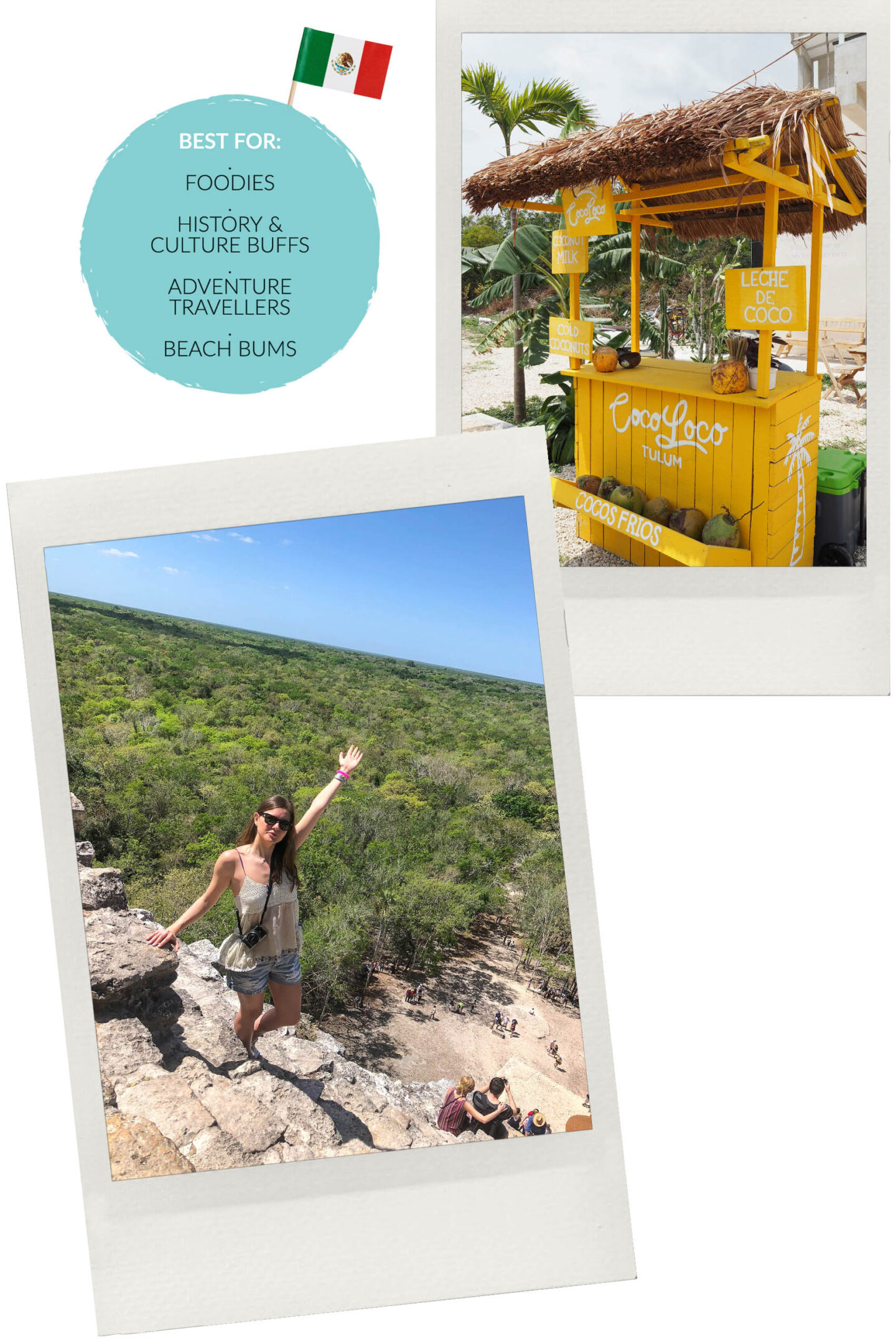
Mexico is one of those countries that one can visit multiple times and still see only a fraction of the incredible sights and experiences that it has to offer.
While putting together your dream itinerary, pick a region and stick with it. I am generally not against a bit of plane hopping, but you don’t need to do that in Mexico.
There’s truly A LOT to see in each region, so slow travel within a smaller geographical area is truly the best way to explore Mexico. Note that even within a region, you are unlikely to be able to see ‘everything’, unless you are there for a month or more.
If this is your once in a lifetime trip to Mexico, my advise would be to choose your destinations based on what speaks to you, rather than what’s the most popular or ‘must-see’ sight.
Go with your gut and compose an itinerary that fits your interests and holiday / vacation style. Having said that, it’s always worth stepping a little bit outside of your comfort zone and experience something new!
Yucatán Peninsula: Perfect for… almost anyone
Choose from cosmopolitan Tulum and family-friendly Cancún, charming Isla Mujeres and Cozumel, stunning Isla Holbox and Lake Bacalar, legendary Chichen Itza, colonial Merida and Valladolid, and hundreds of cenotes dotted all around…
The Yucatán peninsula has the quantity, quality and diversity of destinations to create the trip of a lifetime for everyone… Beach lovers, nature seekers, culture and history buffs as well as travellers who love their creature comforts, glitz and nightlife. That is quite the diverse crowd, right?
More on our trip to the Yucatán below!
Central Mexico: Best for culture and history lovers
Start at Mexico’s central highlands and explore the cultural delights of Mexico City, the colonial architecture of San Miguel de Allende and maybe have a quick stop at Grutas de Tolantongo thermal springs. Explore the legendary Teotihuacan pyramids before heading south to the vibrant cities of Puebla and Oaxaca. Finish your itinerary off with some relaxing days by the beach in Puerto Escondido.
Wishing to immerse yourself into the fascinating history of Mexico? Wanting to experience its rich cultural and culinary scene? This is the itinerary you’ll want to do.
Chiapas: For travellers who wish to go beyond the beaten track
The jungle ruins of Palenque are among the most atmospheric Maya sites in Mexico and along with the nearby jungle-clad waterfalls, they are perfect for travellers who enjoy dramatic natural landscapes and history.
On the other hand, San Cristóbal de las Casas with its colourful streets and striking mountainous scenery (at 2200m / 7220ft altitude) will charm everyone interested in culture, indigenous traditions, and relaxed town life.
Travelling through the state of Chiapas is perfect for travellers longing for more remote and immersive experiences. It can also easily be combined with trips to Yucatán and Oaxaca.
Guadalajara + Pacific coast: For jetsetting with a dash of tequila
Begin in Guadalajara, the cultural heart of the region, known for its historic plazas, mariachi music, and outstanding cuisine. Continue to the charming town of Tequila, set among rolling blue agave fields, where you can visit traditional distilleries and learn about Mexico’s most famous spirit.
From there, head to the Pacific coast to enjoy the beaches and lively atmosphere of Puerto Vallarta, before finishing with a relaxed stay in the surf town of Sayulita, known for its bohemian vibe, golden beaches, and vibrant seaside streets.
Baja California Sur: For stylish coastal relaxation
A journey through Baja California Sur offers a striking blend of desert landscapes, turquoise seas, and relaxed coastal towns. The region is ideal for travellers seeking a mix of marine adventures and stylish coastal relaxation.
Explore the dramatic coastline of Cabo San Lucas, famous for its iconic rock arch, before discovering the charming colonial streets and art scene of Todos Santos. Further north, the laid-back waterfront of La Paz provides access to the pristine islands of the Sea of Cortez, where you can snorkel with sea lions and explore untouched beaches…
MEXICO CLIMATE & BEST TIME TO VISIT
When most people think of Mexico, they think of hot, hot, hot weather. If you are comparing it to the rest of North America or northern Europe, that’s indeed true. However, the truth is a bit more complex than that.
Mexico has a more diverse climate than you may think, due to its size, altitude differences, and proximity to both the Pacific Ocean and the Caribbean Sea. In general, temperatures are influenced more by elevation than latitude. Coastal areas tend to be hot and humid, while highland cities are cooler and more temperate.
Mexico’s climate is generally divided into two main seasons: a dry season (typically November to April) and a rainy season (May to October). The dry season is cooler and sunnier, while the rainy season brings higher temperatures, increased humidity and frequent afternoon showers, particularly in central and southern regions.

The best time to visit is the dry season (November to April), with proper beach weather in the coasts and cool, dry weather in the cities, perfect for sightseeing.
If you’re planning a multi-region itinerary (i.e. Mexico City → Oaxaca → Chiapas → Yucatán), the best months are February–early April or end of November. These months offer great weather across almost all regions of Mexico.
November (opt for the last 2 weeks) is often overlooked because it is right at the end of rainy season. However, the landscape is lush, waterfalls are full and it’s when the Day of the Dead celebrations take place in Oaxaca (on Halloween weekend).
Baja California Sur: Desert Climate
This region experiences the biggest temperature difference between seasons in Mexico. Desert conditions mean it is generally dry year-round, regardless of the season.
November–April: Very little rainfall
Day 15–25°C (59-77°F), nights can drop below 10°C (50°F) in desert areas
May–October: Still generally dry overall
Daytime temperature often 35–45°C (95-111°F)
Occasional thunderstorms from monsoon systems
Yucatán Peninsula: Caribbean Tropical Climate
The region is hot and lush, with jungles, cenotes and Caribbean beaches.
Dry season (November–April): Relatively dry
Temperature: 24–28 °C (75-83 °F)
Rainy season (May–October): Frequent tropical showers
Temperature: 30–34°C (86-93°F)
Hurricane season peaks August–October
Central Highlands: Temperate Plateau Climate
Mexico City sits at 2240m (7349ft) above sea level and Puebla at 2150m (7053ft). San Miguel de Allende sits at 1900m (6233m) and Guadalajara at 1566m (5138ft). All high altitude cities and surrounding highland areas are known for their very pleasant climate, which many call ‘eternal spring’.
Dry season (November–April): Very dry and sunny
Day 20–24°C (68-75°F), night 5–10°C (41-50°F)
Rainy season (May–October): Frequent afternoon thunderstorms
Day 24–28°C (75-82°F), night 12–15°C (54-59°F)
Oaxaca sits in the Valley of Oaxaca at about 1,550 m (5085ft) elevation. The valley location gives Oaxaca warm sunny days and relatively mild nights.
Dry Season (November–April): Mostly sunny and dry
Day 24–28°C (75-82°F), night 10–14°C (50-57°F)
Rainy Season (May–October): Frequent afternoon thunderstorms
Day 25–30°C (77-86°F), night 14–17°C (57-63°F)
Chiapas: Rainforest lowlands and cooler mountain towns
The two most famous towns of Chiapas experience different climates due to difference in altitude. San Cristobal is a cool, mountainous, highland town, while Palenque is a hot, tropical lowland town.
Dry Season (November–April): Low rainfall
Highlands 10–22°C (50-72°F), lowlands 25–30°C (77-86°F)
Rainy Season (May–October): Heavy raindfall
Highlands 18–24°C (64-75°F), lowlands 30–34°C (86-93°F)
Puerto Vallarta, Sayulita, Acapulco, Puerto Escondido: Pacific Tropical Climate
Dry Season (November–April): Mostly dry and sunny
Temperatures: 26–30°C
Rainy Season (May–October): Heavy rainfall and tropical storms
Temperatures: 30–34°C
YUCATAN PENINSULA TRAVEL GUIDES
Yucatán, Quintana Roo & Campeche
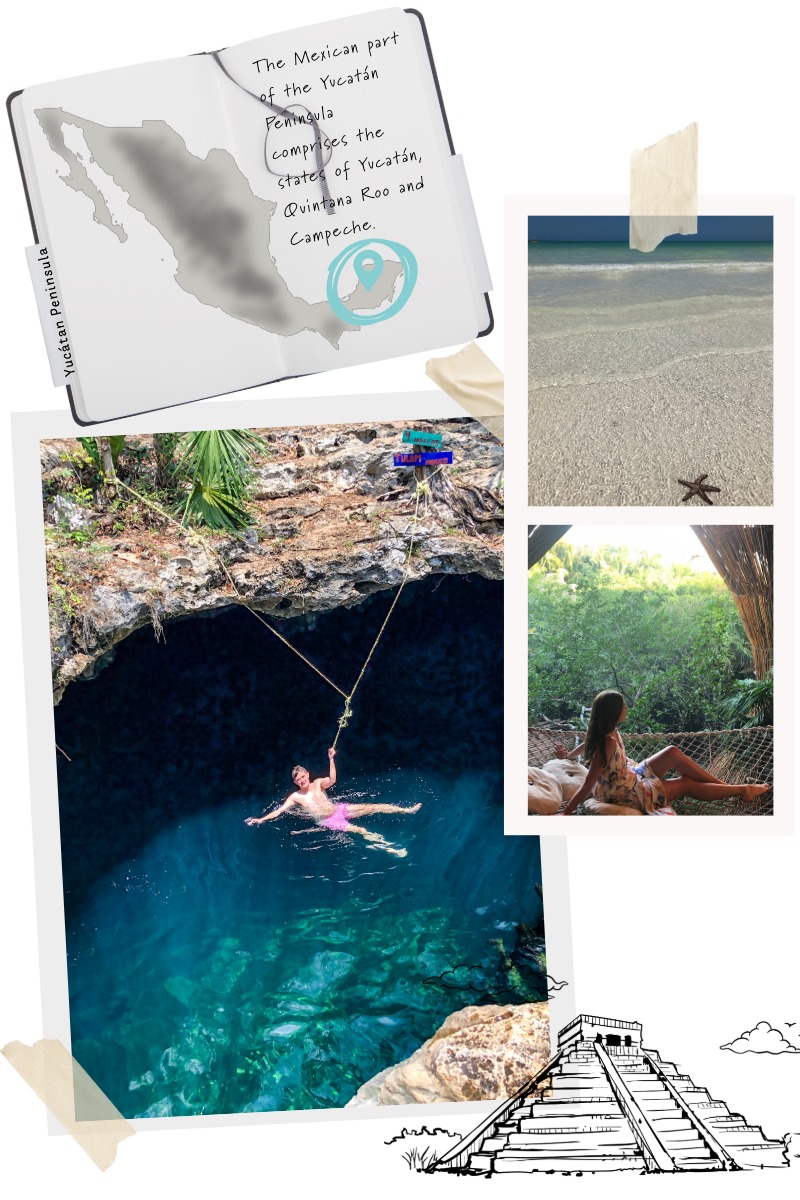
The Yucatán Peninsula is located in southeast Mexico between the Gulf of Mexico and the Caribbean Sea and is one of Mexico’s most captivating regions. It is known for its blend of ancient history, natural wonders and relaxed Caribbean atmosphere.
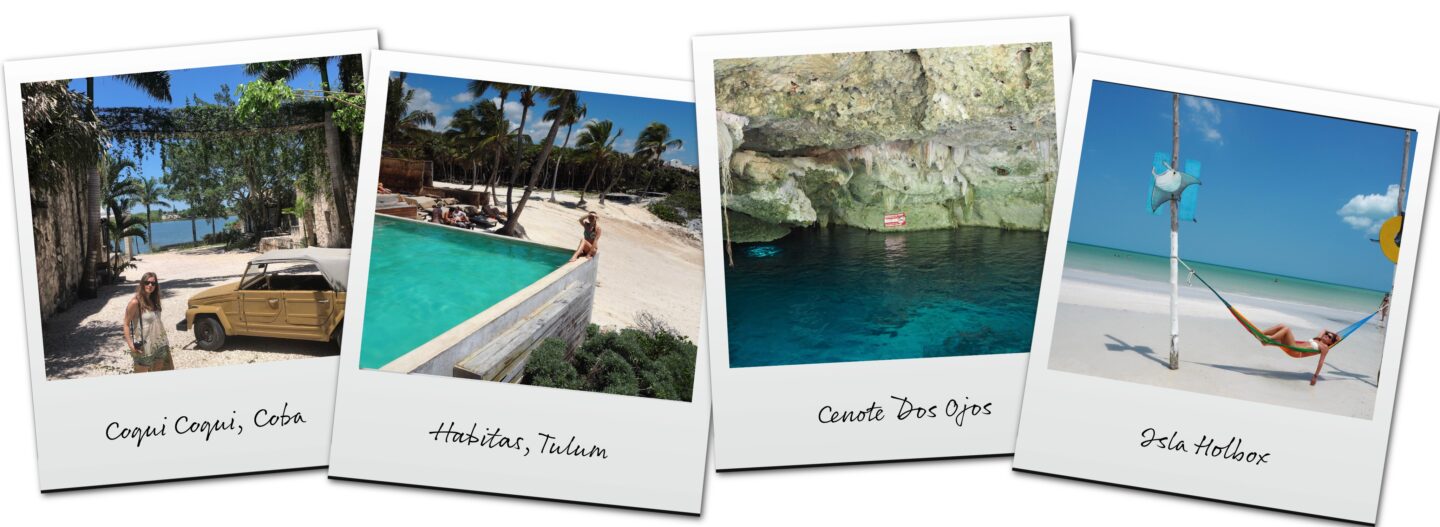
Visitors come to explore remarkable Maya archaeological sites such as Chichén Itzá and the seaside ruins of Tulum, swim in the peninsula’s famous limestone sinkholes known as cenotes, and enjoy the white-sand beaches and turquoise waters along the Caribbean coast. The region also offers vibrant colonial cities like Mérida and Valladolid and laid-back island escapes such as Isla Holbox and Isla Mujeres where wildlife, fresh seafood and slow-paced beach life provide a contrast to the cultural richness of the inland towns.
Apart from the plethora of diverse activities (as well as the option of doing nothing at all), there’s a variety of accommodation and dining options throughout most of the region. So, you can go as lux or low key as you wish.
The Yucatán Peninsula is a popular destination for a reason. The greatest thing about it is that with so much to offer, it is very easy to create the exact type of trip that suits YOU.
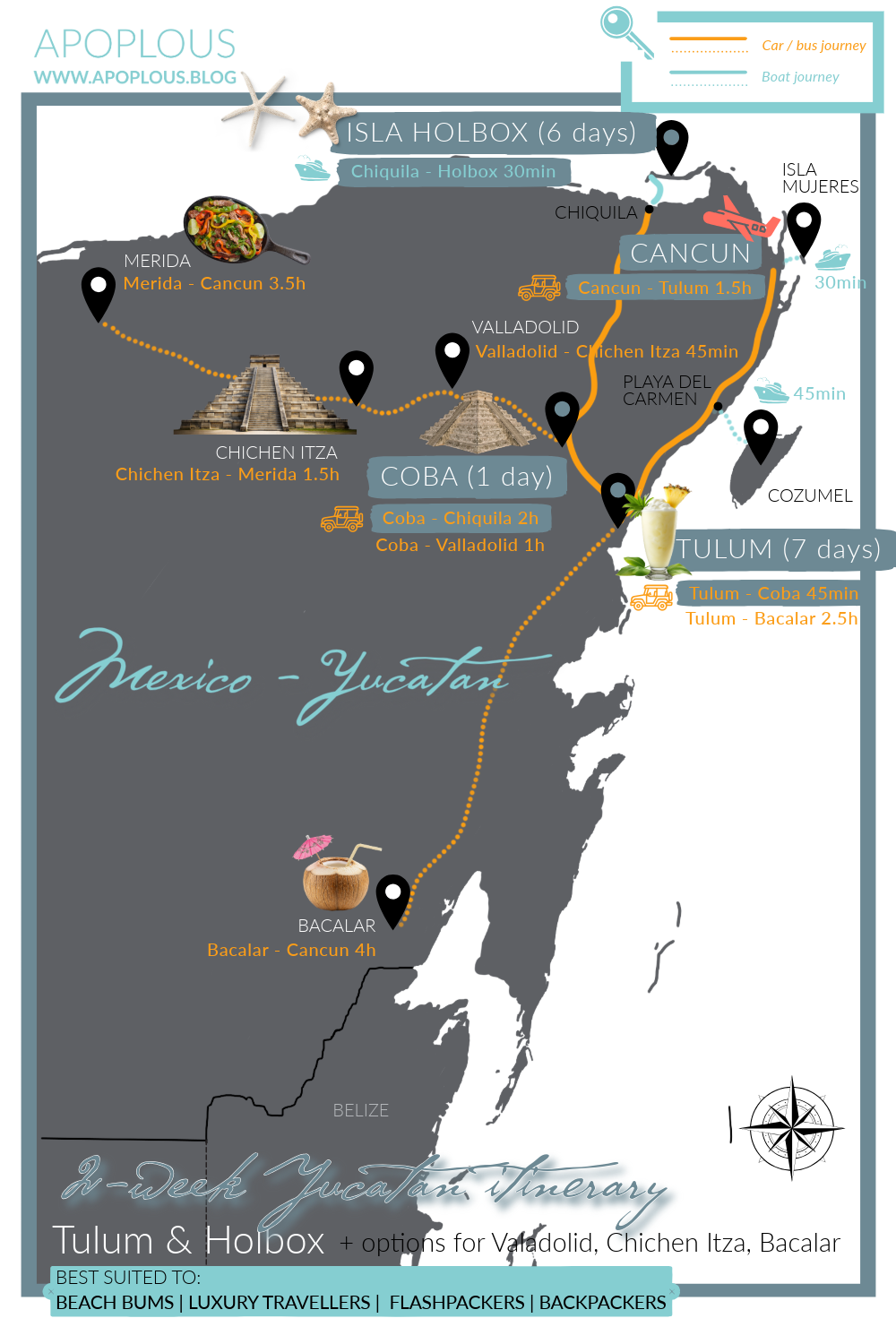

Who is this itinerary best suited to?
Travellers who love culture, nature and aquatic activities in equal measure. Luxury travellers, flashpackers, backpackers.
ln Mexico, you can easily adjust the price range of your accommodation & meals accordingly!
2-Week Itinerary:
Tulum | Holbox
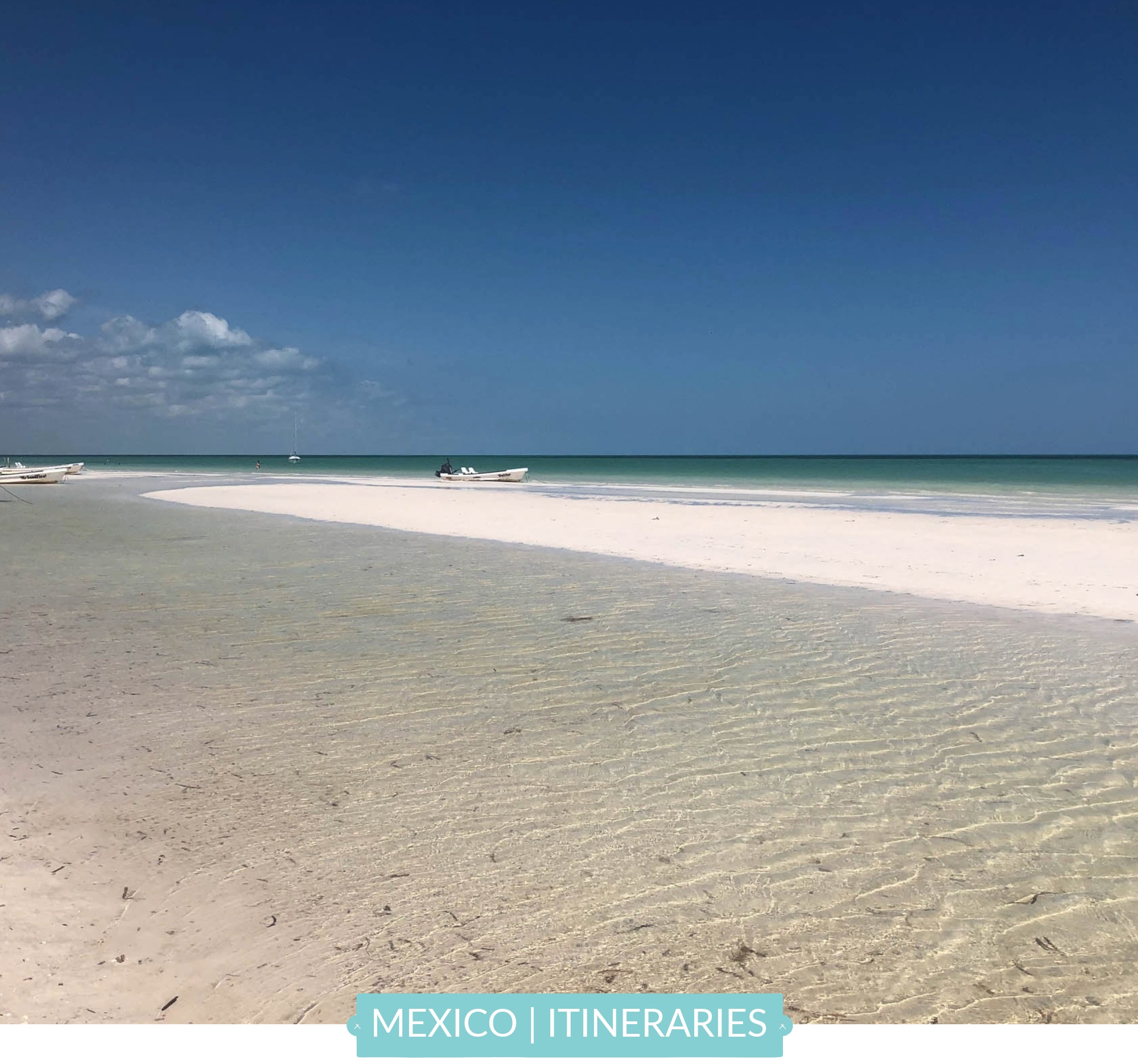
With Tulum being the cosmopolitan super star and heavenly Isla Holbox featuring beaches that look photoshopped, this is a trip that will leave you wanting for more!
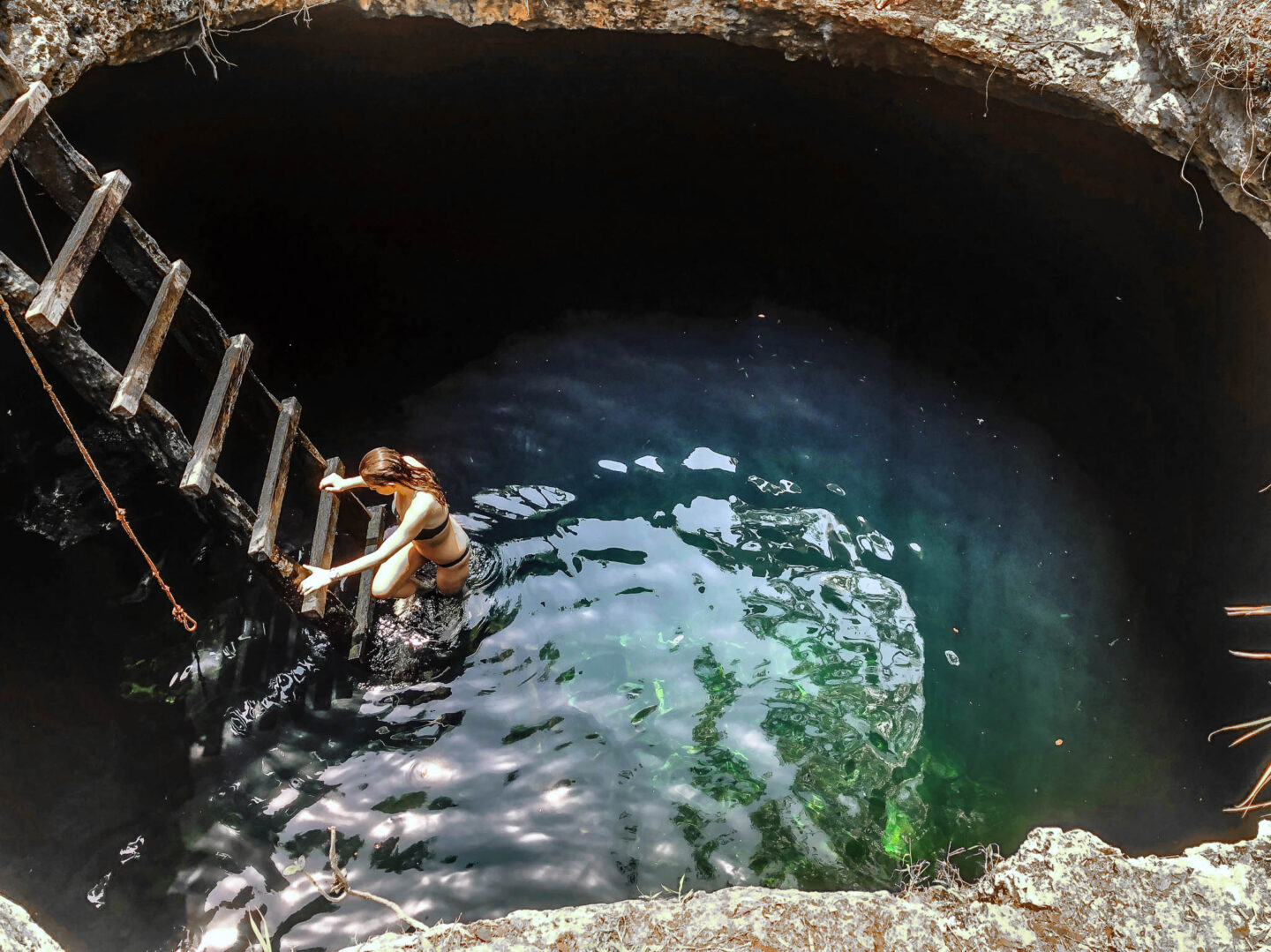
Exploring Mayan ruins or practicing yoga outdoors, relaxing by the beach or exploring mysterious cenotes, enjoying world class dining or scrumptious tacos at a seaside shack, this itinerary has all the adventure and relaxation opportunities that you could wish for!
Tulum:
Tulum town & beach | Cenotes | Coba Archaeological Park | Tulum ruins
Holbox:
The iconic white-sand-turquoise-water beaches of Holbox | Bioluminescense canoe ride
+ Recommendations for even more exciting destinations, a stone’s throw away from Tulum: Valladolid, Chichen Itza, Merida
Best time of the year for this itinerary: December – May
READ THE BLOG POST: